Can we use this vendor? Know what needs attention first.
A vendor’s answers are only part of the assessment. Caijo helps your team describe the service, the data and the access involved, then works through the relevant requirements and risks. Your experts get the context they need without having to lead every initial interview.
We’ll contact you to arrange free test access. Bring a use case relevant to your team.
“The questionnaire says yes.” Caijo asks what that covers.
Follow a support-service review from the first request to a contextual requirement, a risk and proposed actions. The important detail is not the supplier’s name. It is the shared account and the files leaving the CRM.
Read the conversation
More vendor reviews. Not more interview meetings.
Start with the business owner
The colleague buying or operating the service can begin in plain language, without arriving with a complete vendor-risk brief.
Ask about the actual access
Bring shared accounts, exports and additional systems into the assessment instead of leaving them behind a general supplier description.
Keep missing evidence visible
A broad control statement can remain an open question when it does not establish what happens in this service.
Give specialists useful work to review
Bring the relationship, assessed requirements, risks and proposed actions together for focused review.
“They completed the questionnaire.” What does that tell us about this service?
Compare this incomplete hand-off with the contextual review. The before column is not a claim about every questionnaire or competing product.
What the vendor states
- “Access is restricted.”
- “Data is encrypted.”
- “Named accounts are available.”
- “The review is complete.”
What the review establishes
- Which people can access this CRM, through which accounts, and for what work?
- Which exported copies exist and who can open them?
- The option stays distinct from a safeguard already implemented.
- Facts, evidence gaps, risks and actions remain distinguishable.
An assessment of the relationship. Not just a file about the supplier.
Service and data flows
CRM records, provider access and exported cases are described together.
Requirements in context
Individual accountability is assessed against the proposed shared account.
Risks and existing safeguards
The misuse scenario is considered alongside reported restrictions, encryption and supervision.
Recommended actions
Access and logging changes, and export-retention arrangements, become concrete follow-ups.
More than a report. Information your team can maintain.
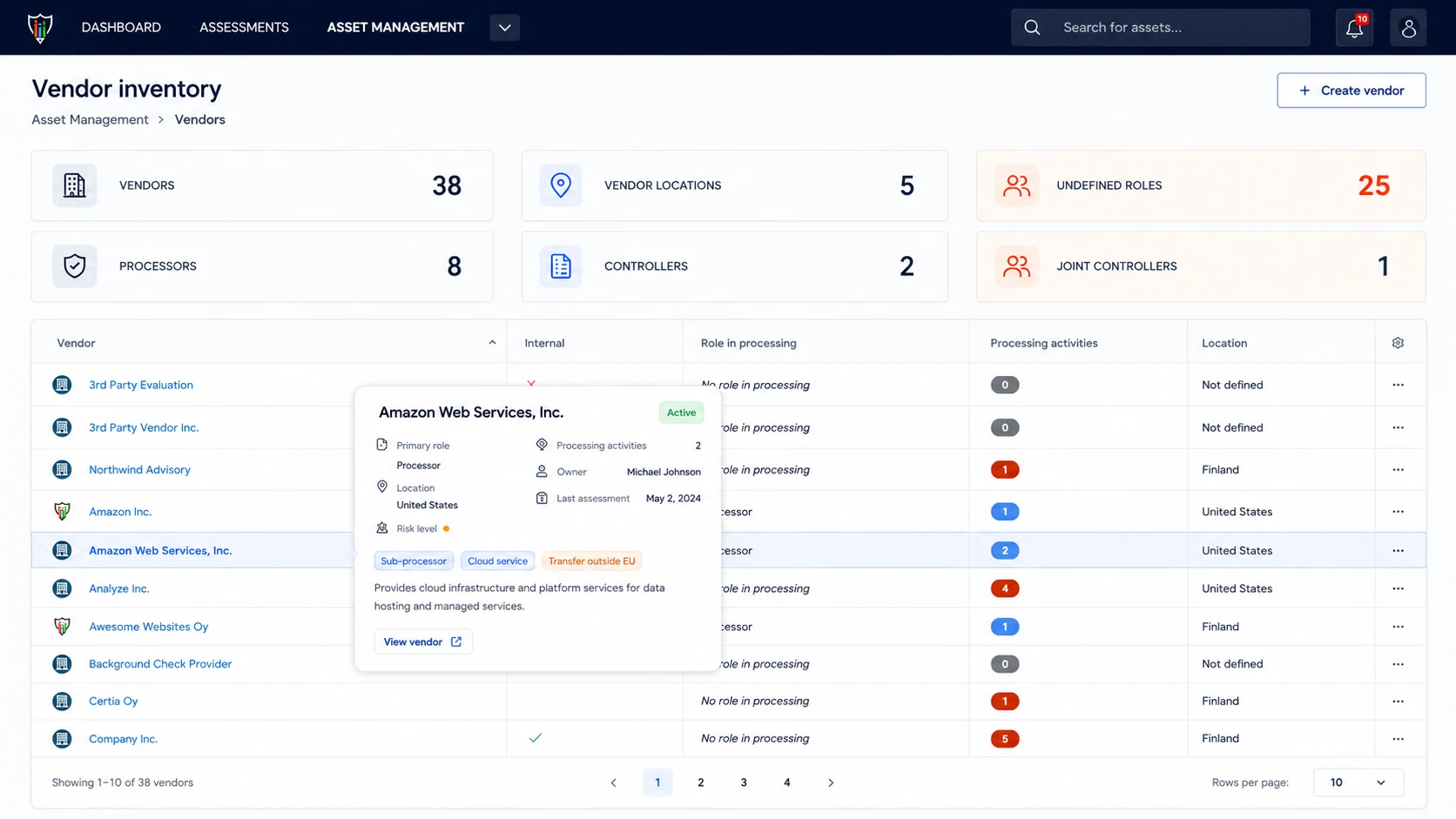
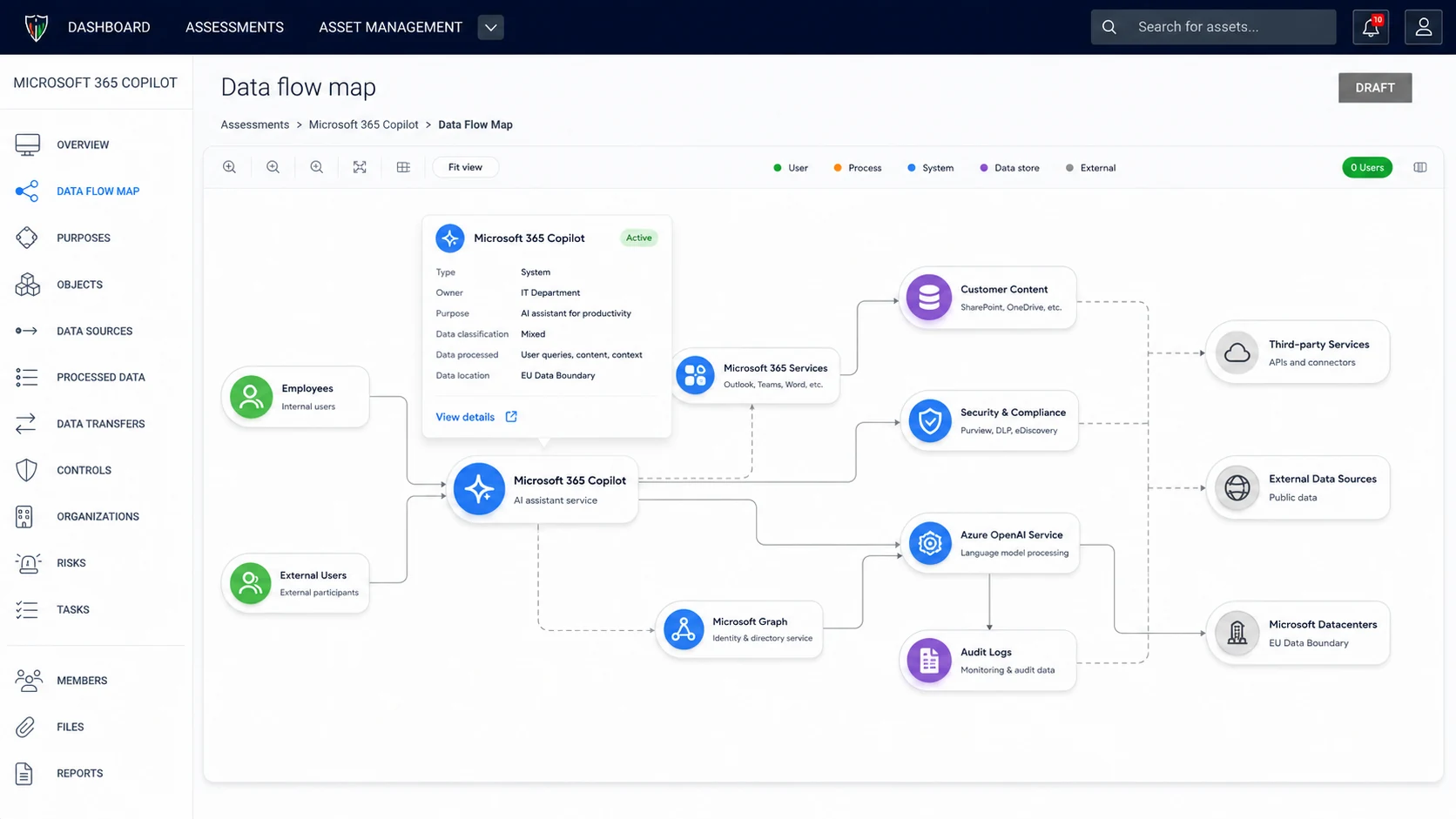
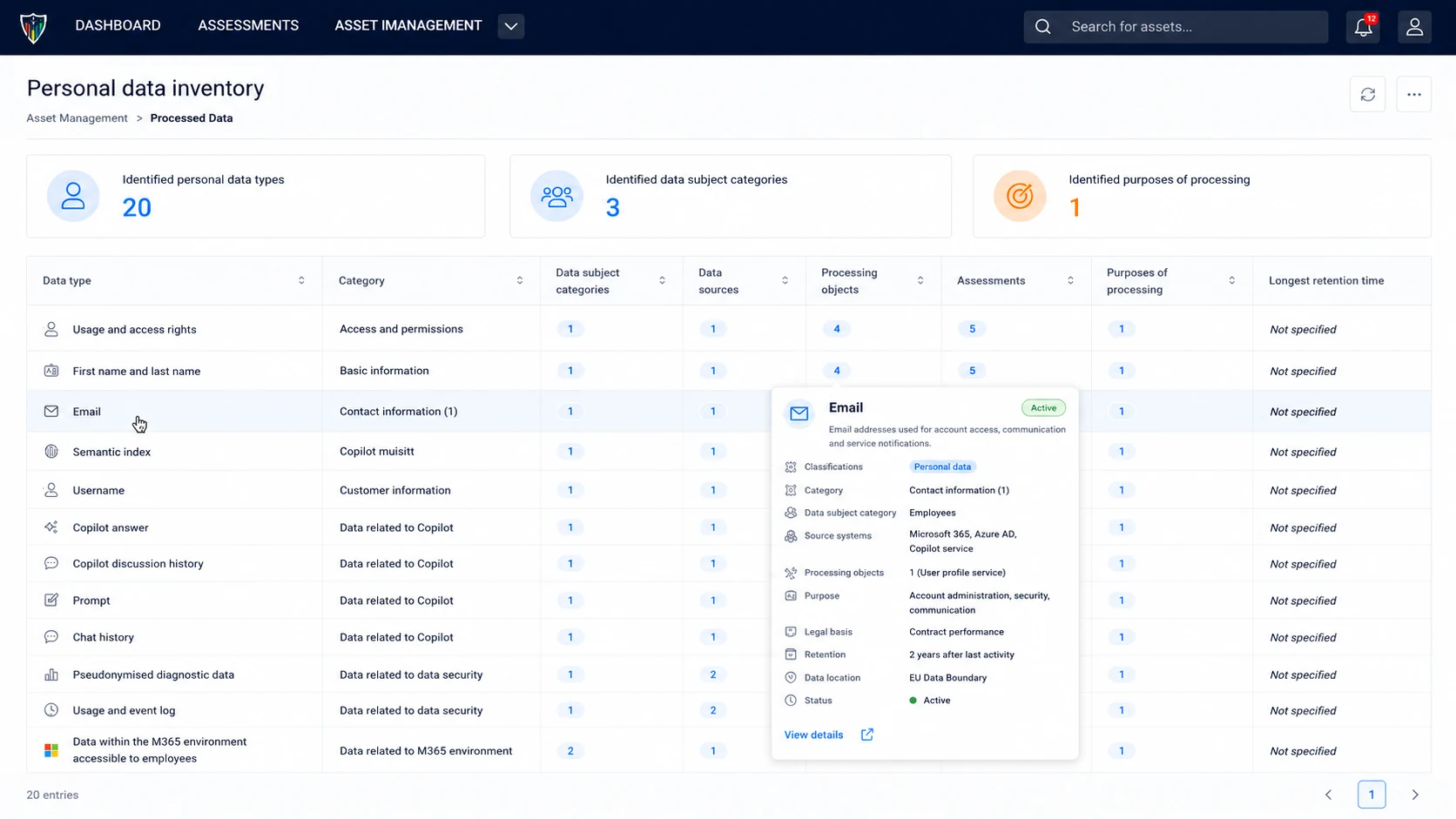
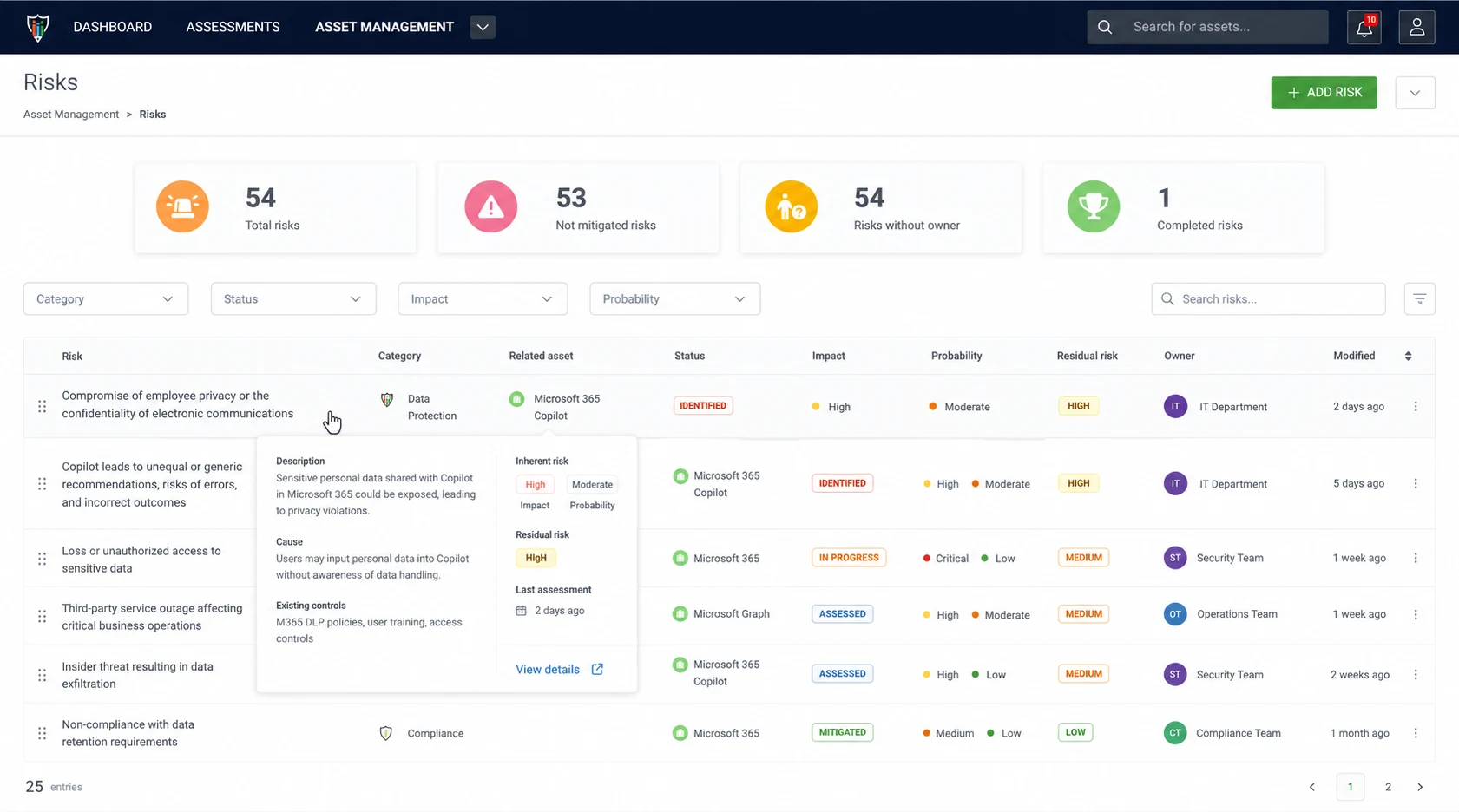
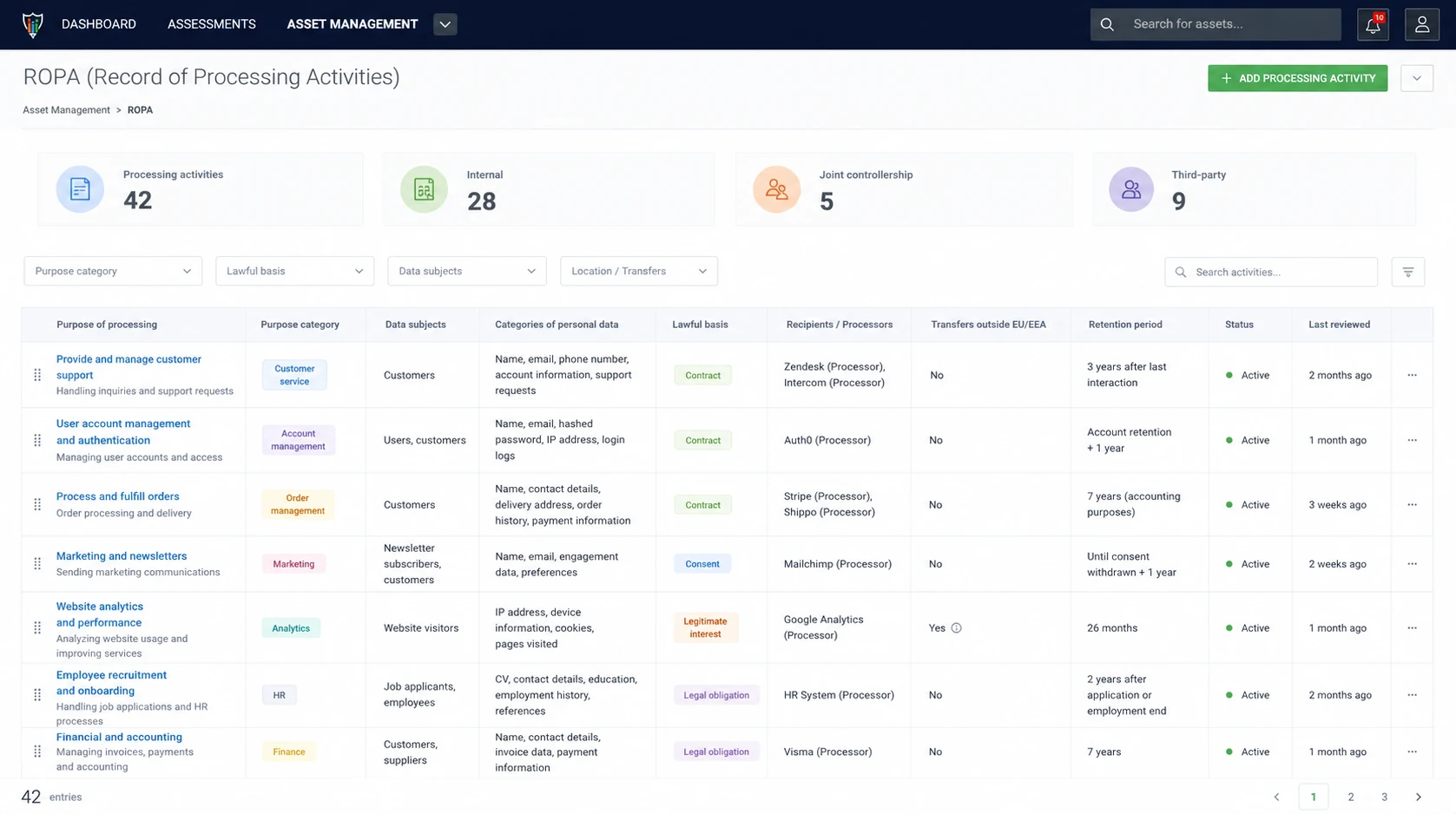
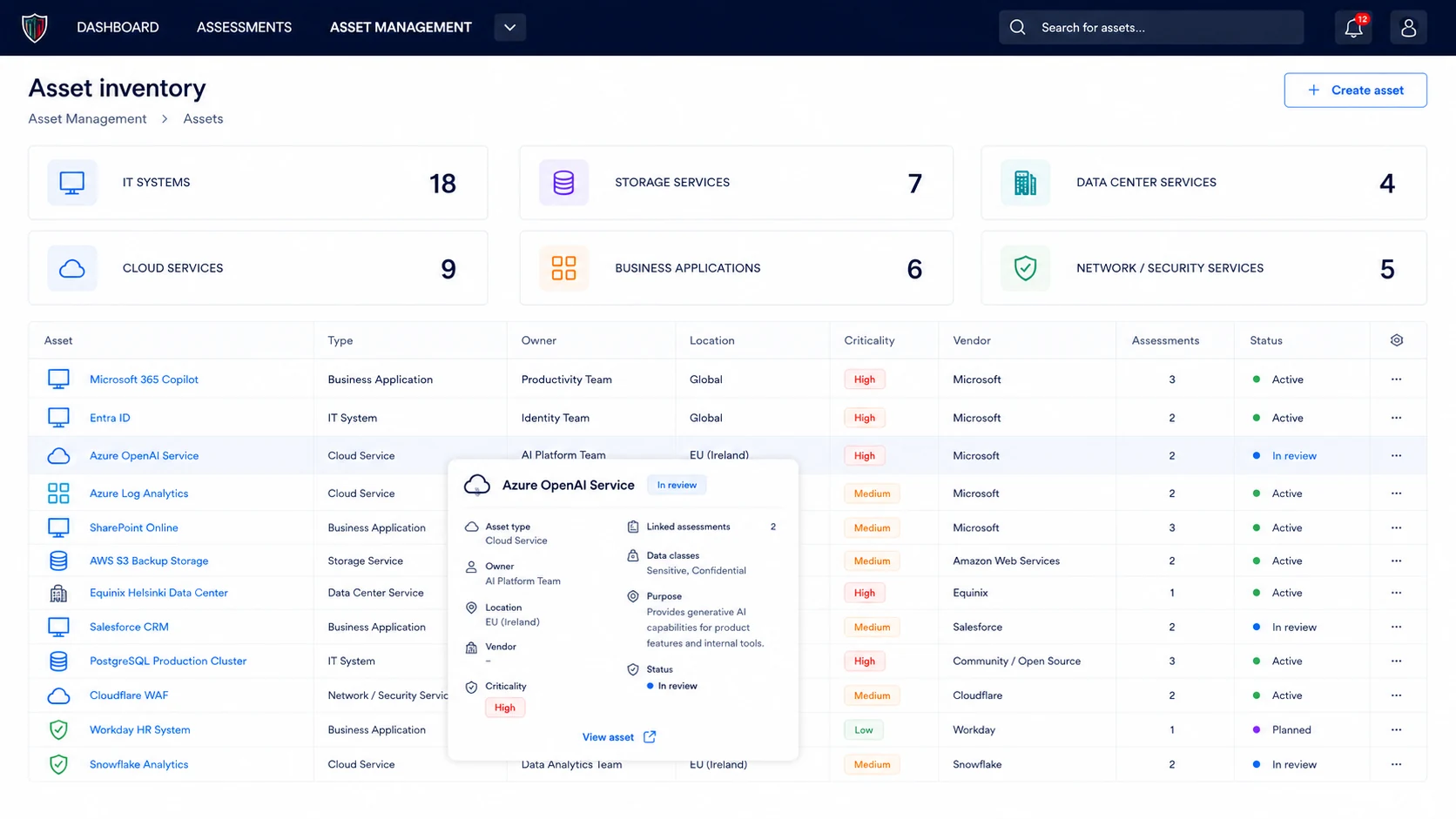
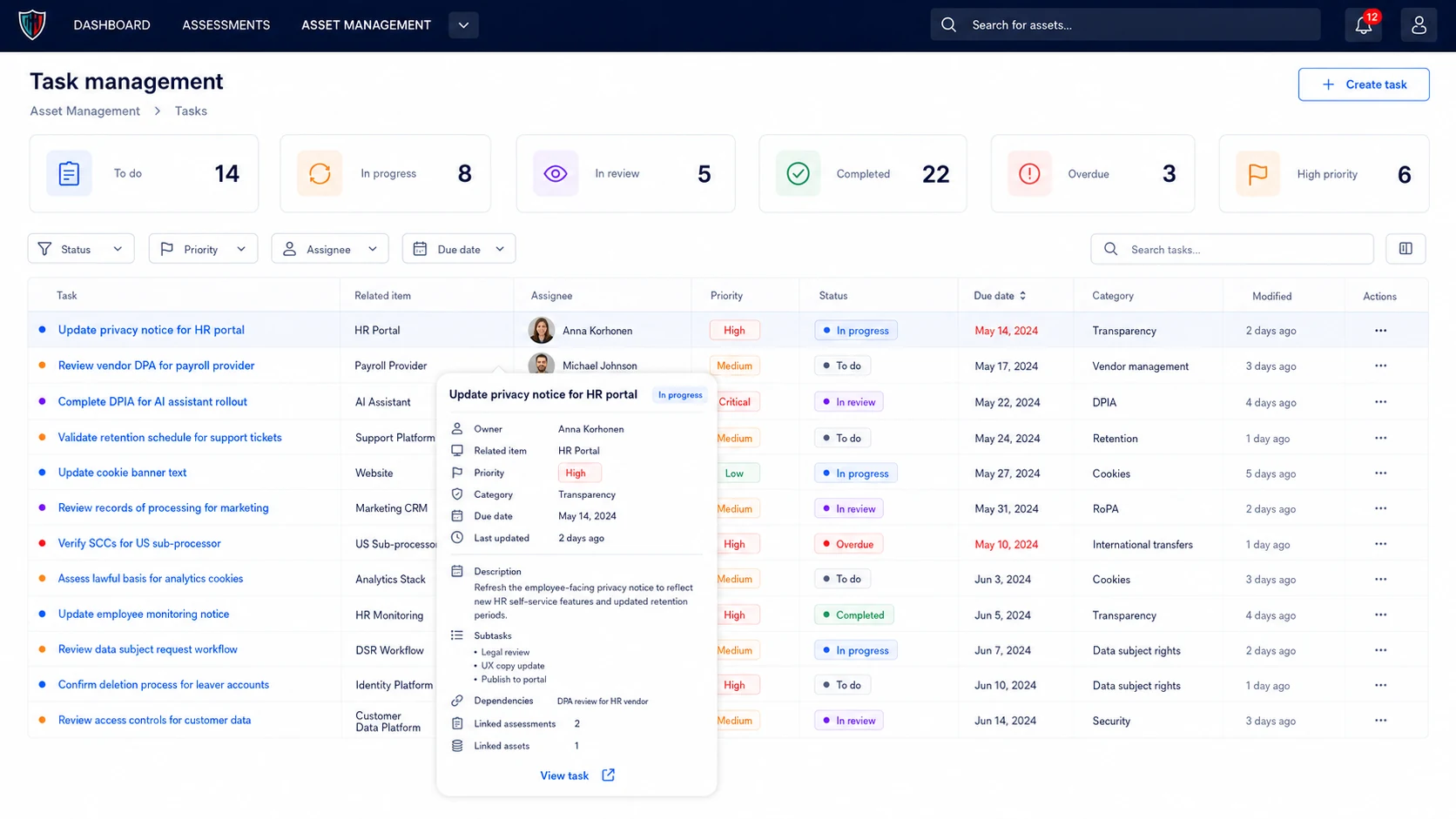
The assessment contributes to connected vendor, system, processing, risk and task records in PrivacyDesigner. Your team can revisit the relationship without treating the report as an isolated file. These are the modules it writes to, use the tabs or arrows to move between them.
Your assessment criteria. Applied to the use in front of you.
Choose the supported framework agreed for the assessment, or configure your organisation’s requirements in PrivacyDesigner. Your colleagues can describe the project in plain language while your experts review the analysis and recommendations.
The team behind Caijo brings more than a decade of hands-on privacy-assessment experience to its fact-finding and documentation approach.
Other privacy questions your team may be facing.
Mobile apps and SDKs
Understand what an SDK does in your implementation, what data it receives and what your team needs to establish before relying on it.
Explore SDK assessmentsAI tools and copilots
Start with what an AI tool will actually do (its access, its outputs, and who receives them) before the rollout decision.
Explore AI tool assessments