DORA vendor reviews. Less chasing. Clearer decisions.

Understand the service. Know the dependencies. See what needs to change.

Caijo interviews the people who know the ICT service, works through your assessment requirements, and brings the findings, risks and practical next steps together for expert review.

Your team describes how the service is used. Caijo asks the questions they might not know to include in a questionnaire.

Request free access. We’ll confirm the DORA assessment setup for your test.

Start the conversation 24/7 No prompt-writing required Findings, risks and actions together

“We can export our data.” Can you keep the business running?

app.privacydesigner.com
Assessments
Hosted payment-reconciliation platform DORA ICT third-party risk assessment
C
Caijo
Hosted payment-reconciliation platform
Service owner

We're reviewing a hosted platform for daily payment reconciliation. The supplier says we can export our data and move elsewhere if necessary.

Caijo

Let’s start with the business activity, because the ability to export data only answers part of the continuity question. What would happen to payment reconciliation if the platform were unavailable, and how long could your team manage without it?

Service owner

We could reconcile the most urgent items manually for about a day. Beyond that, the backlog would grow and discrepancies would take longer to resolve.

Caijo

That gives us a concrete dependency to assess. The manual workaround covers a limited interruption; we should not assume it supports a prolonged one.

What information goes into the platform, where do the results go, and where is the export kept? Those details help establish what would actually need to be recovered.

Service owner

Payment records come from our payment system, and reconciliation results go into the accounting system. We keep a nightly export in our own separate storage.

Caijo

I’ll record those flows and the nightly export as reported by your team. The next step is to complete and confirm the service description before we work through the requirements, including the implications of disruption for the functions this service supports.

Caijo

Your framework asks whether the proposed transition arrangements can restore the business activity within the time your organisation needs. For this service, the question is how reconciliation resumes, not simply whether the supplier provides an export.

Where would you restore the exported data, and what would need to be configured before processing could restart?

Service owner

We haven't selected a replacement platform. We would need to configure it, check that it could use the export and rebuild the integrations. None of that has been tested.

Caijo

My proposed finding is that a transition capability has not yet been demonstrated. The separate export is useful, but it does not establish that a replacement can read the data or perform reconciliation in time.

I’ll keep that distinction in the assessment. Is it accurate that there is currently no configured alternative and no tested transition?

Service owner

Yes. We had treated the export as our exit plan, but there is more work behind it.

Caijo

The risk scenario is a prolonged loss of the hosted service while there is no ready alternative. Reconciliation could be delayed beyond the manual workaround’s capacity, leaving a growing backlog and discrepancies unresolved.

Your nightly export may reduce potential data loss, provided it is complete and usable. It does not yet address the time needed to restore the activity. Have you checked the export’s completeness or tested recovery with it?

Service owner

Not in a recovery exercise. We also haven't set the longest interruption the business could tolerate beyond that first day.

Caijo

Then those are important uncertainties in the current risk assessment. The existing measures are the reported export and limited manual workaround. A replacement platform or successful recovery test is not an implemented safeguard yet.

I recommend confirming the business’s recovery needs and testing the proposed route against them. That would help establish whether the alternative is workable and which improvements would reduce the remaining exposure. Does this describe the practical concern?

Service owner

Yes. Having the data would help, but it would not let us resume reconciliation immediately.

Caijo

The assessment now describes the dependency, records the transition finding and explains the risk of a prolonged interruption.

I recommend three follow-ups: confirm the recovery needs with the business; define a workable alternative, including export usability, configuration, integrations and required supplier assistance; and test the proposed route against those needs.

These are recommendations, not completed safeguards. Shall I record them as tasks for your team to assign and take forward?

Service owner

Yes. Now we know what operations, IT and procurement need to work through before the renewal decision.

Caijo

I’ll record the tasks with the assessment. Your reviewers can now examine a specific service dependency, a reasoned finding and a practical improvement plan, not just a statement that data can be exported.

Free testing

Try it on a project of your own.

Request free access. We’ll confirm the DORA assessment setup for your test.

Try Caijo for free

Less time collecting answers. More clarity about the arrangement.

Get beyond the supplier’s description.

“We have backups.” “We can switch providers.” Caijo explores what those answers mean for your business: what stops working, what depends on the service, and what recovery would actually involve.

Apply your requirements, not just a generic questionnaire.

Configure your internal security, evidence and procurement requirements alongside DORA-focused controls in PrivacyDesigner. Caijo applies them to the service’s actual use, rather than expecting the service owner to interpret the rules.

Give your reviewers an assessment to work with.

Get the service description, requirement findings, risks and recommended actions together. Your specialists can focus on the important decisions, not start another meeting to reconstruct the arrangement.

Not every arrangement needs the same depth. Each needs a reasoned review.

Caijo asks which business functions the service supports and what disruption would mean. That context helps your experts determine the appropriate review, including whether the service supports a critical or important function.

A service that does not support a critical or important function is not simply waved through. The assessment still examines relevant ICT risks and safeguards, with practical findings and recommendations.

For arrangements supporting critical or important functions, work through the additional applicable requirements. Your experts can tailor the assessment methodology and internal escalation criteria, not the legal definition or obligations.

One service. A clearer basis for the next decision.

The arrangement, described.

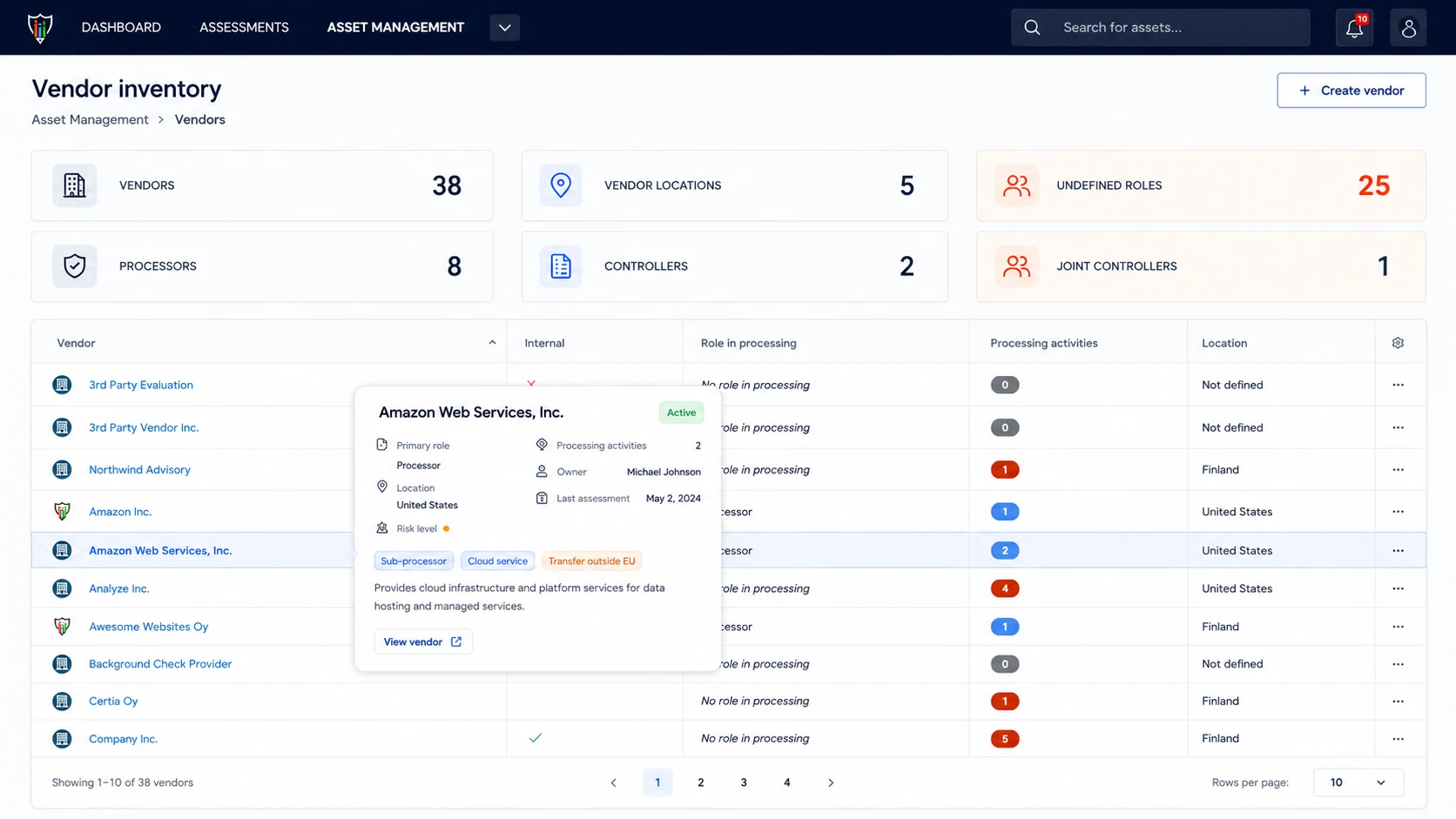
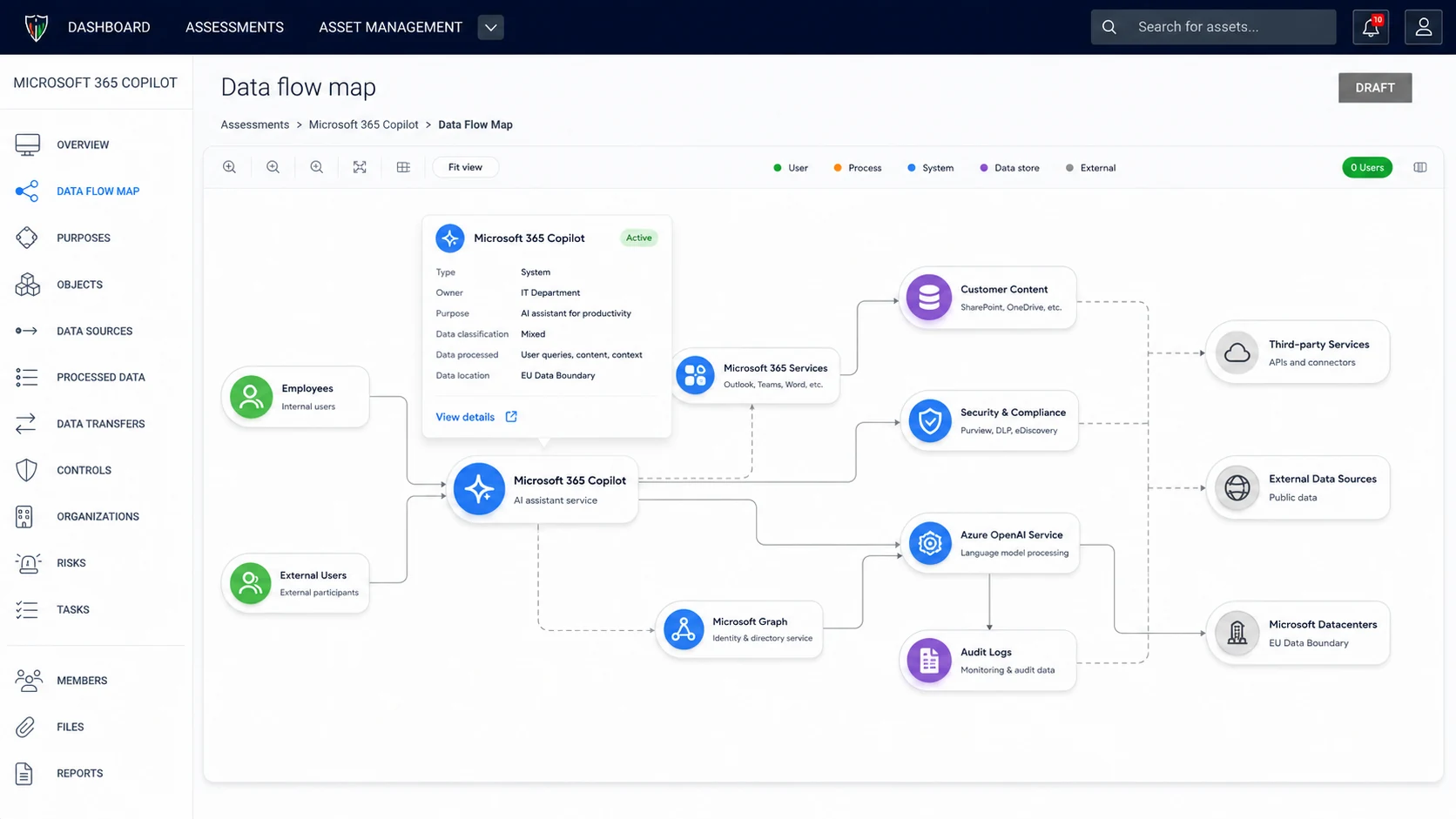
The purpose, provider, systems, information flows and dependencies, including relevant subcontracting identified during the interview.

Requirements, assessed in context.

Security, service continuity, contractual commitments and exit arrangements, alongside your configured internal controls.

Risks, explained.

The consequences of disruption or compromise, the safeguards already in place and the exposure that remains.

Actions, ready to take forward.

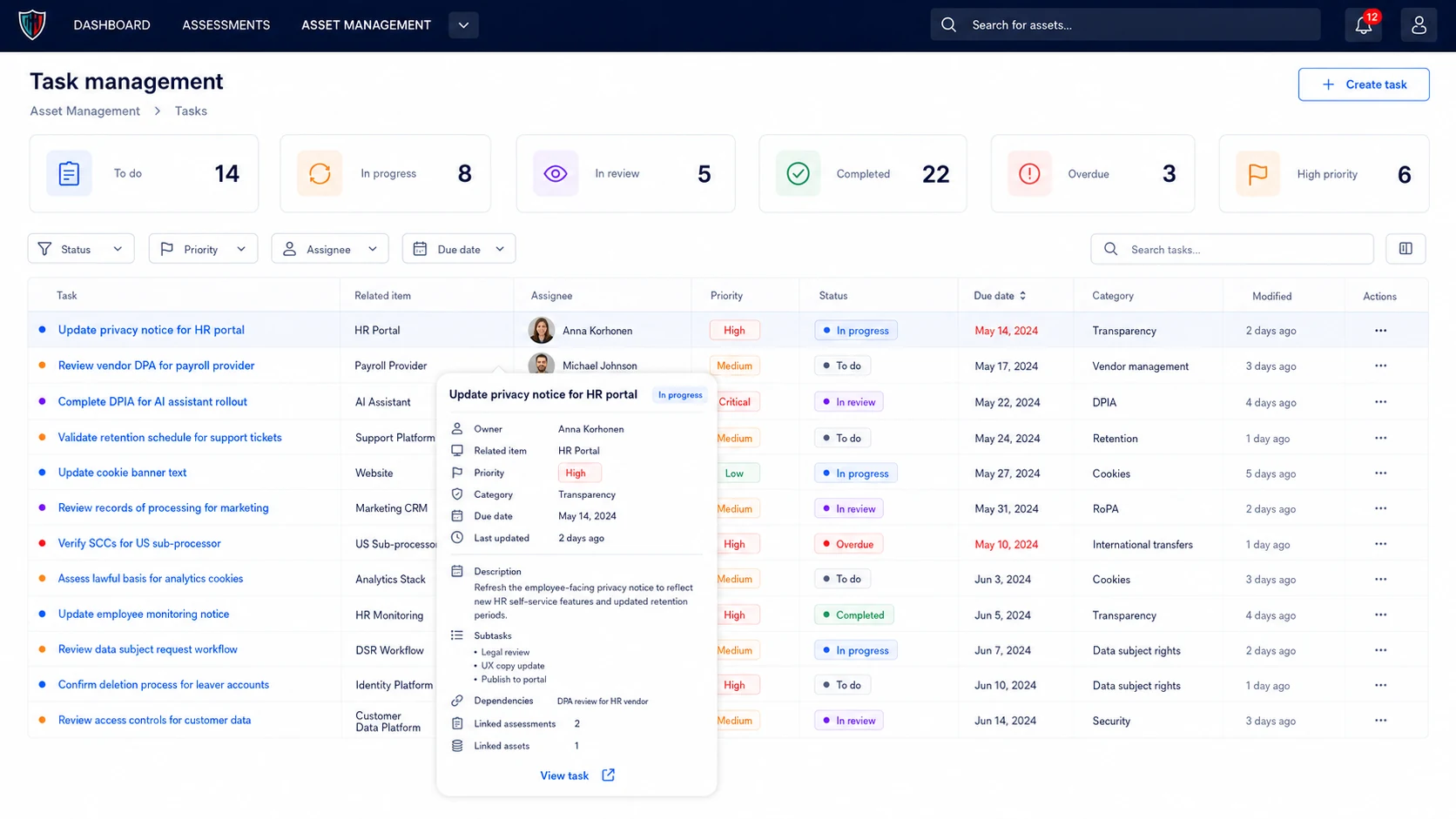
Specific improvements and evidence reviews recorded as tasks, with proposed measures kept separate from implemented safeguards.

The assessment ends. The information stays connected.

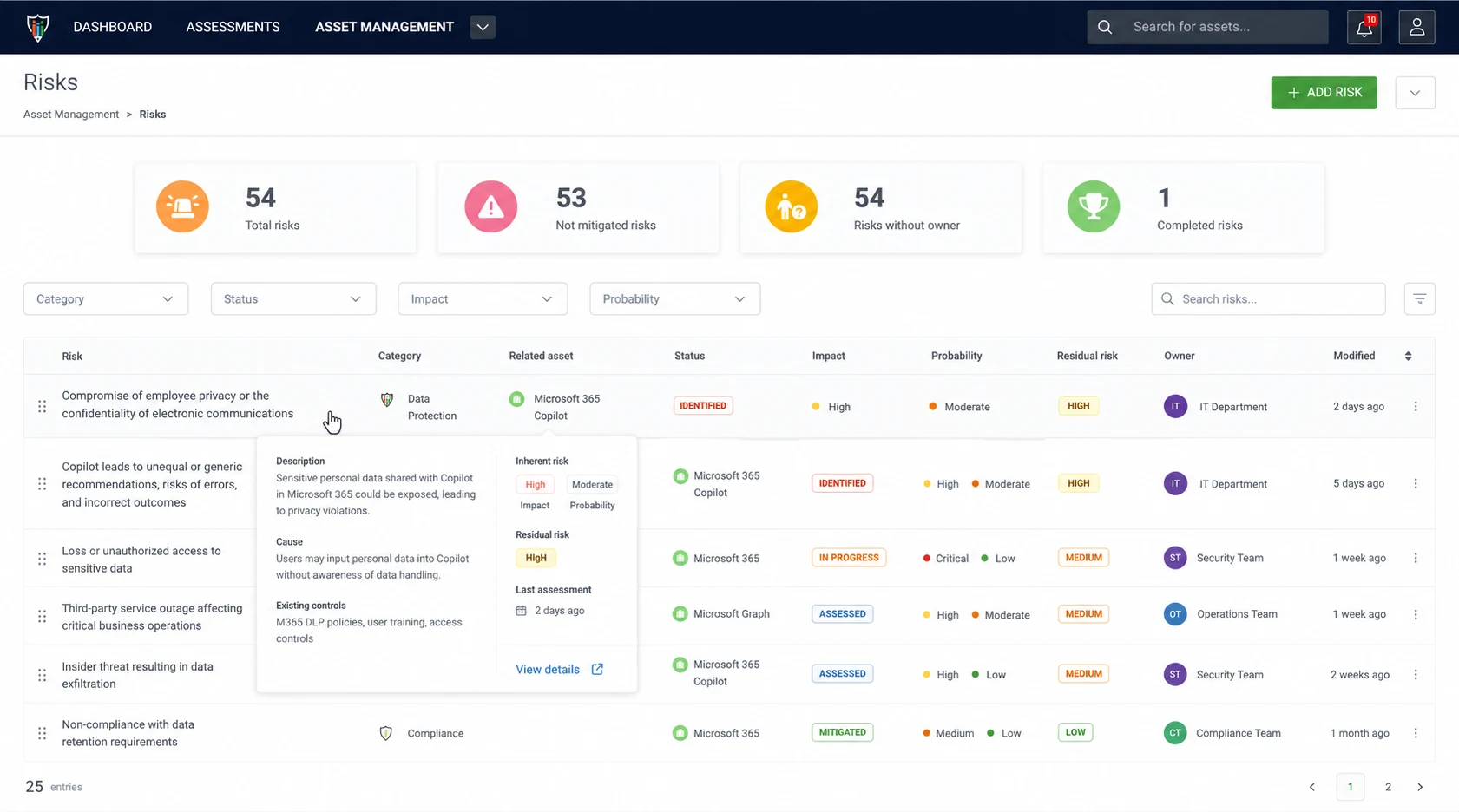
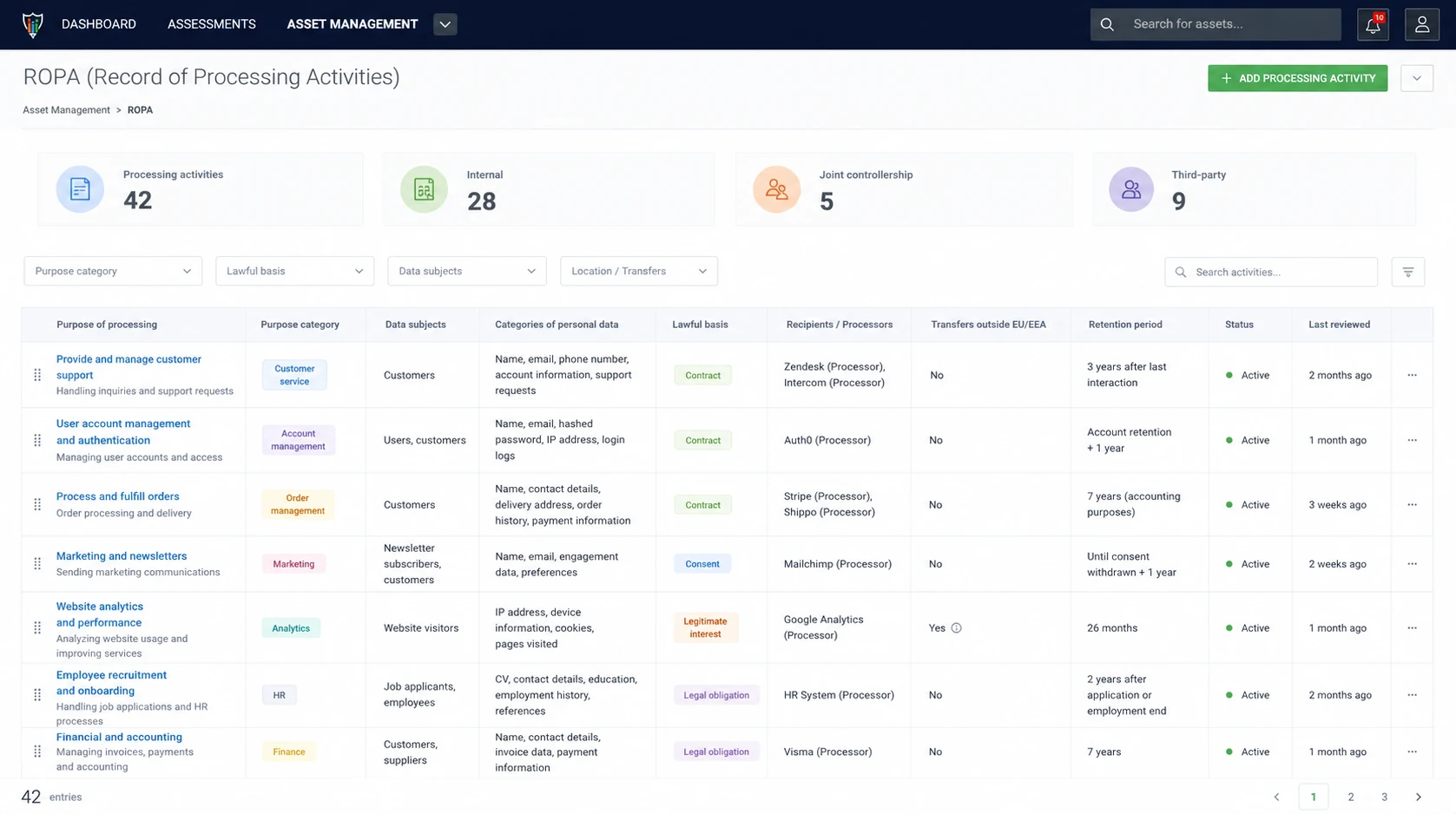
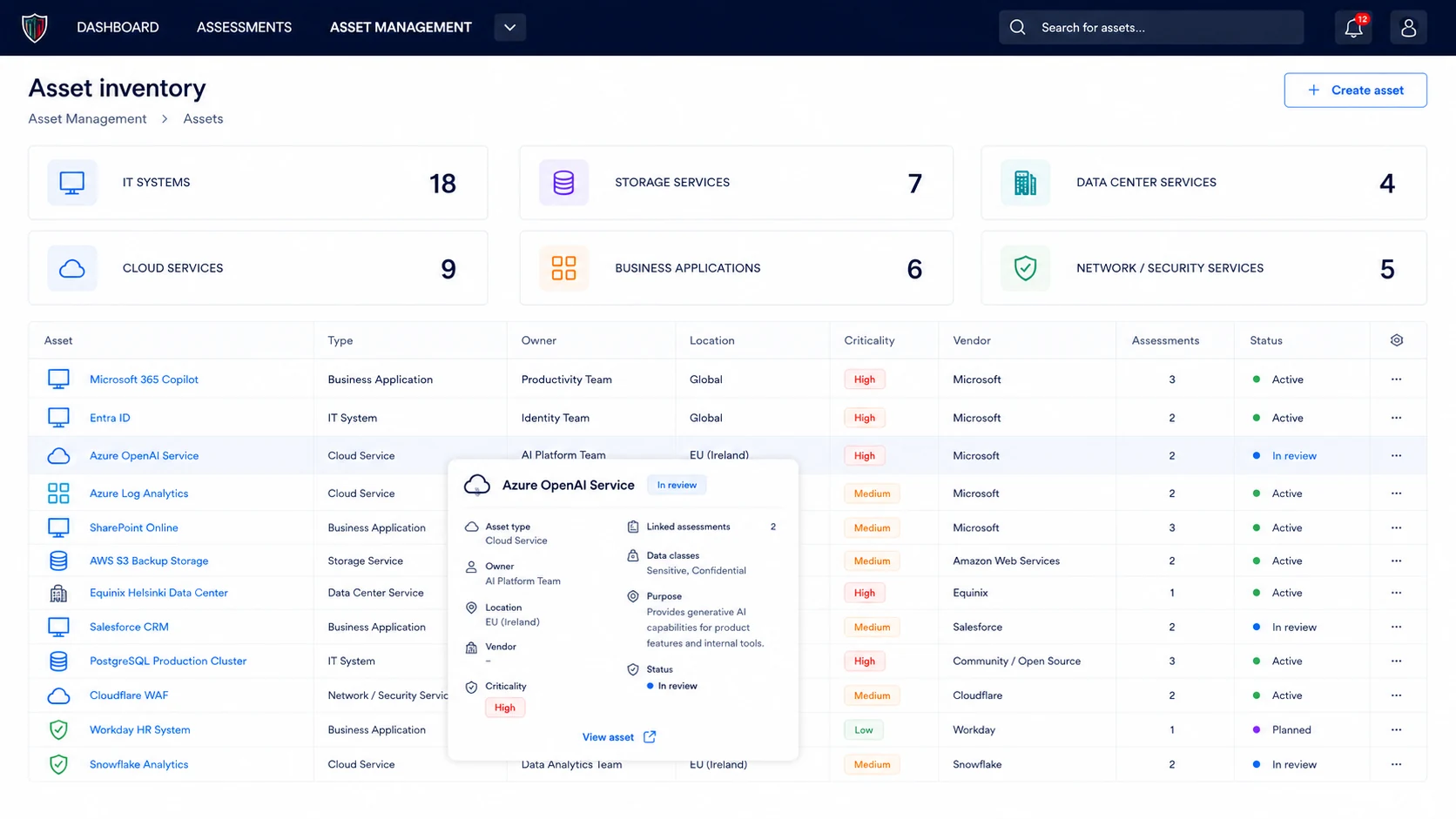
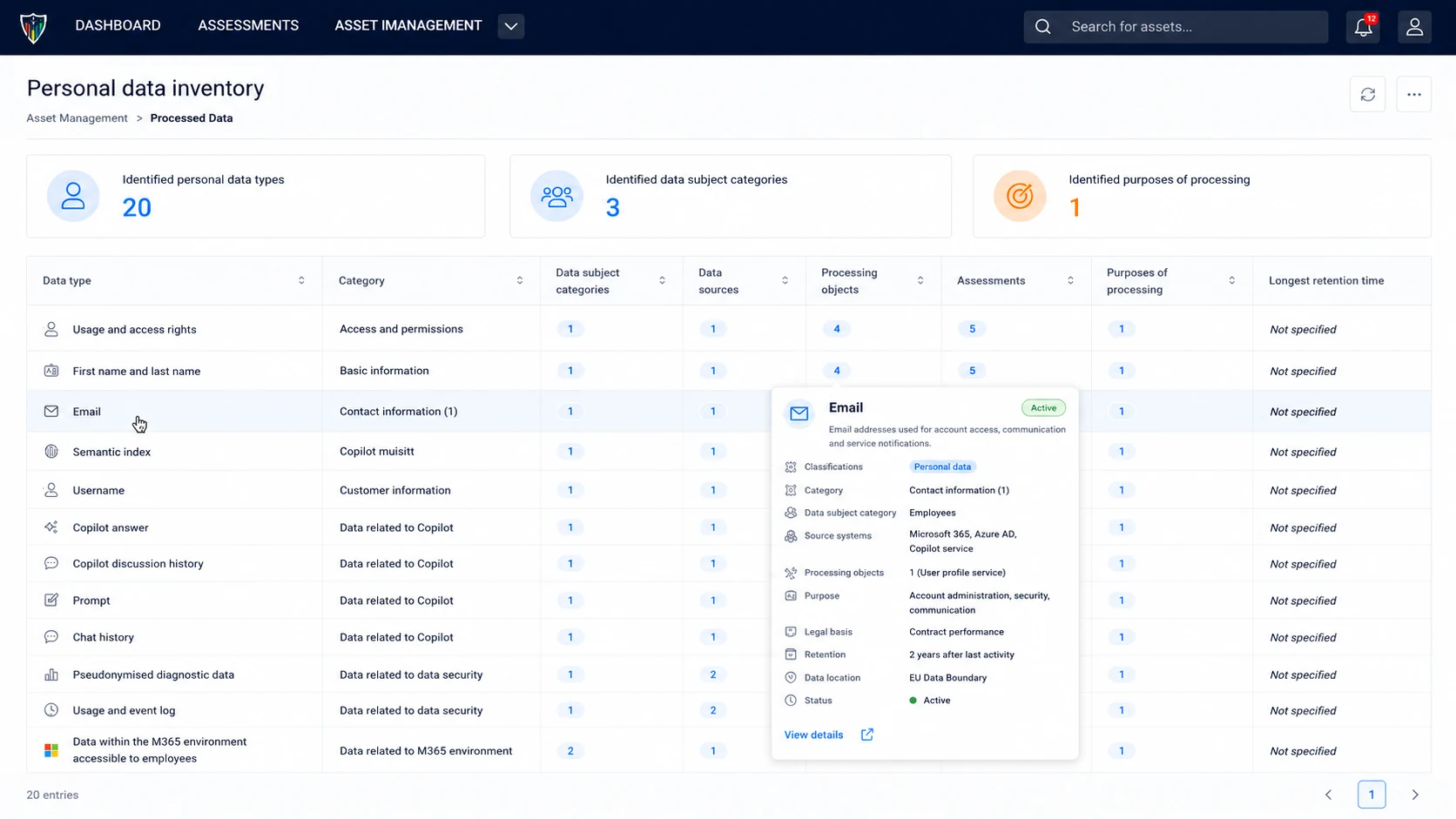
Providers, systems, risks and recommended actions become connected records in PrivacyDesigner, not information buried inside another report. Your team keeps the service context and assessment findings together, making the work useful beyond the next onboarding or renewal decision. Less fragmentation between the people managing the service and the people reviewing its risks.
Your next provider decision starts with an assessment, not a collection exercise.

The service owner can explain what the business depends on. Security can focus on the safeguards and evidence. Legal can see which contractual commitments need attention.

Caijo handles the structured interview and initial assessment. Your experts spend their time reviewing the findings and deciding what needs to change, not translating the same answers between teams.

Bring the ICT service you need a decision on.

A new provider. A renewal. An exit plan that nobody has tested. See how Caijo turns what your team knows into a structured assessment and practical next steps.

Request free test access. Start with one ICT arrangement.

Request a walkthrough

DORA assessment questions, answered.

Can we use our own assessment methodology?
Yes. Your experts can configure internal requirements and assessment guidance in PrivacyDesigner and combine them with DORA-focused controls. This shapes what Caijo investigates and how the findings are organised. Internal criteria do not remove applicable legal requirements. Explore custom frameworks.
Is this only for providers supporting critical or important functions?
No. DORA third-party risk work is not limited to those arrangements. Caijo supports a proportionate assessment of the service and its risks; arrangements supporting critical or important functions require additional attention under the applicable requirements.
Can we start with an existing provider?
Yes. Bring an existing service, a renewal or a proposed arrangement. Start with what your team knows about how it is used. Missing information becomes a focused follow-up, rather than a reason to postpone the entire review.
Does Caijo automatically verify supplier evidence?
No. This workflow uses the information your team supplies and identifies where supporting evidence needs evaluation. A supplier statement or an unreviewed report is not treated as independently verified. It is not continuous monitoring or automated security testing.
Does this cover our entire DORA programme?
No. This is an assessment of a specific ICT service arrangement, supporting your wider DORA work. Your organisation remains responsible for the broader programme, evidence evaluation and decisions. Completing the assessment is not certification of compliance.
Try Caijo for free