More research assessed. Less back-and-forth.
Your researchers know their studies. They should not need to know every detail a privacy assessment will ask for. Caijo guides them through participants, methods, systems and data handling, so your privacy team can focus on the questions and risks that need expert attention.
We’ll contact you to arrange free test access. Bring a use case relevant to your team.
The transcripts have no names. What about the recordings?
Follow an interview study beyond its coded analysis files. Recruitment, original audio and external transcription each add something the assessment needs to understand.
Read the conversation
Let researchers explain. Let your experts focus on the assessment.
Start with the study
Researchers can describe participants, methods and tools in familiar language.
Follow the project beyond analysis
Include recruitment, recordings, external services and retained originals.
Make different roles visible
Bring interviewers, analysts, collaborators and providers into the access discussion.
Focus reviewer time on unresolved issues
Keep the description, analysis and unanswered questions together for the institutional process.
The protocol explains the research. The assessment needs the data journey.
Compare this thin protocol summary with the fuller data journey. The before column is not a claim about every research project or institution.
What the protocol states
- “Names are removed.”
- “Data stays on our drive.”
- “Only researchers have access.”
- “We will review quotations.”
What the review establishes
- Describe originals, recruitment emails and the code key separately.
- Include the transcription service and its retained copies.
- Ask which roles need the recordings and linking key.
- Record the intended check as planned, with responsibility and timing to define.
A project description your reviewers can assess. And the next questions already visible.
Study and information flows
Recruitment, recording, transcription, analysis and retained materials are described.
Requirements in context
Access to originals and the key is considered against each role’s tasks.
Risks and existing safeguards
Identification and disclosure concerns are assessed with reported restrictions.
Recommended actions
Access separation, retention, service checks and quotation review become follow-ups.
More than a report. Information your team can maintain.
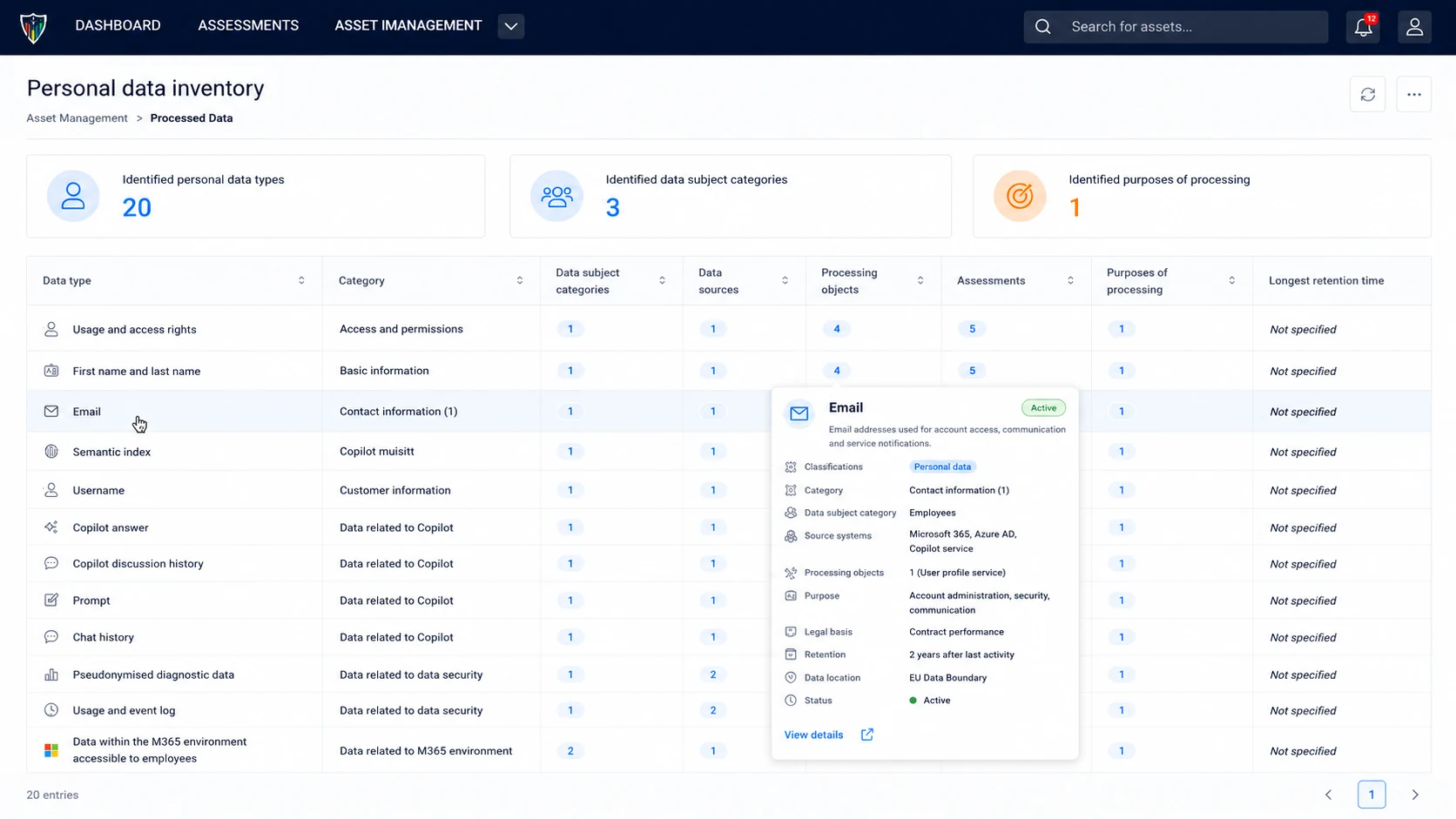
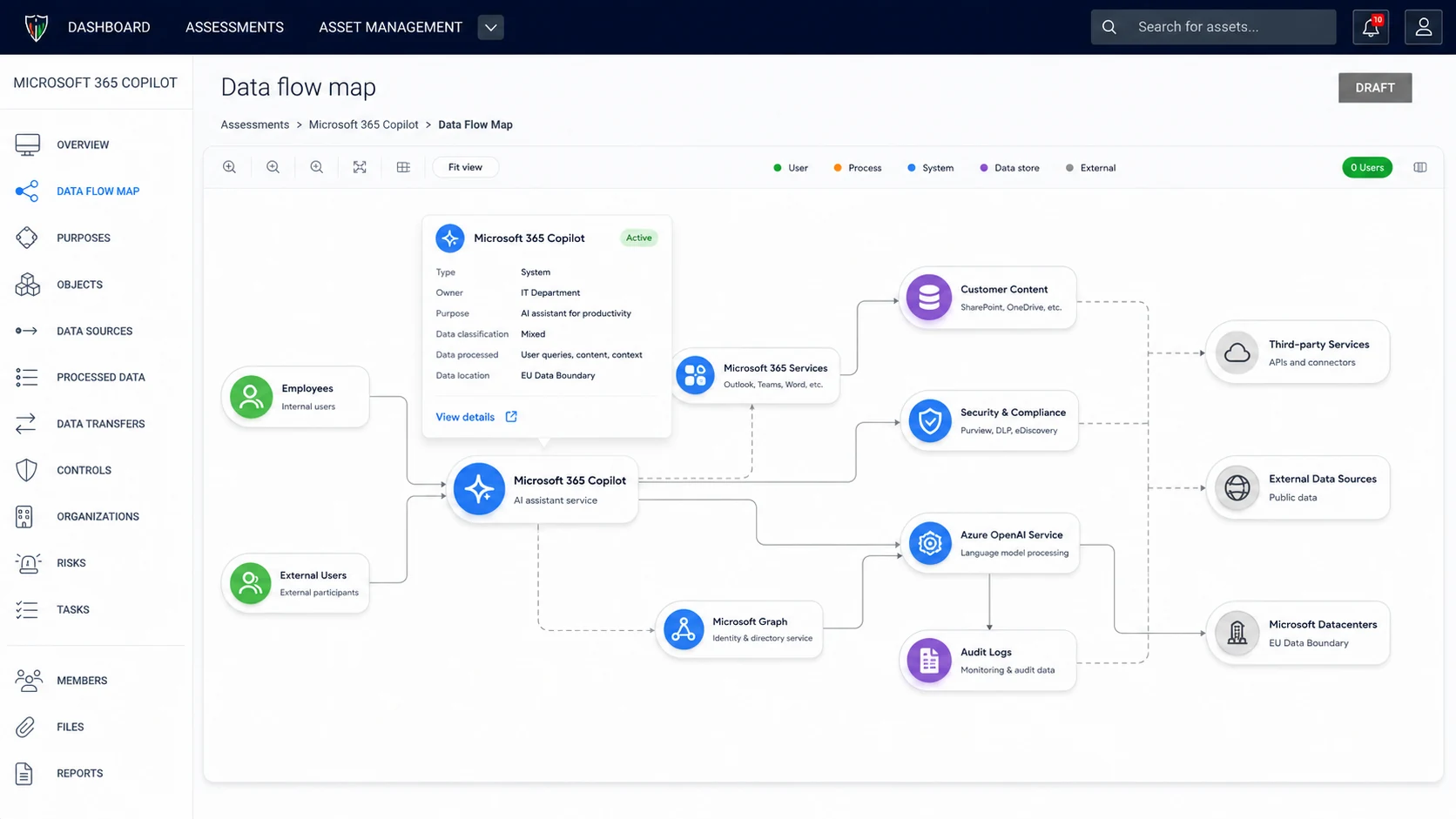
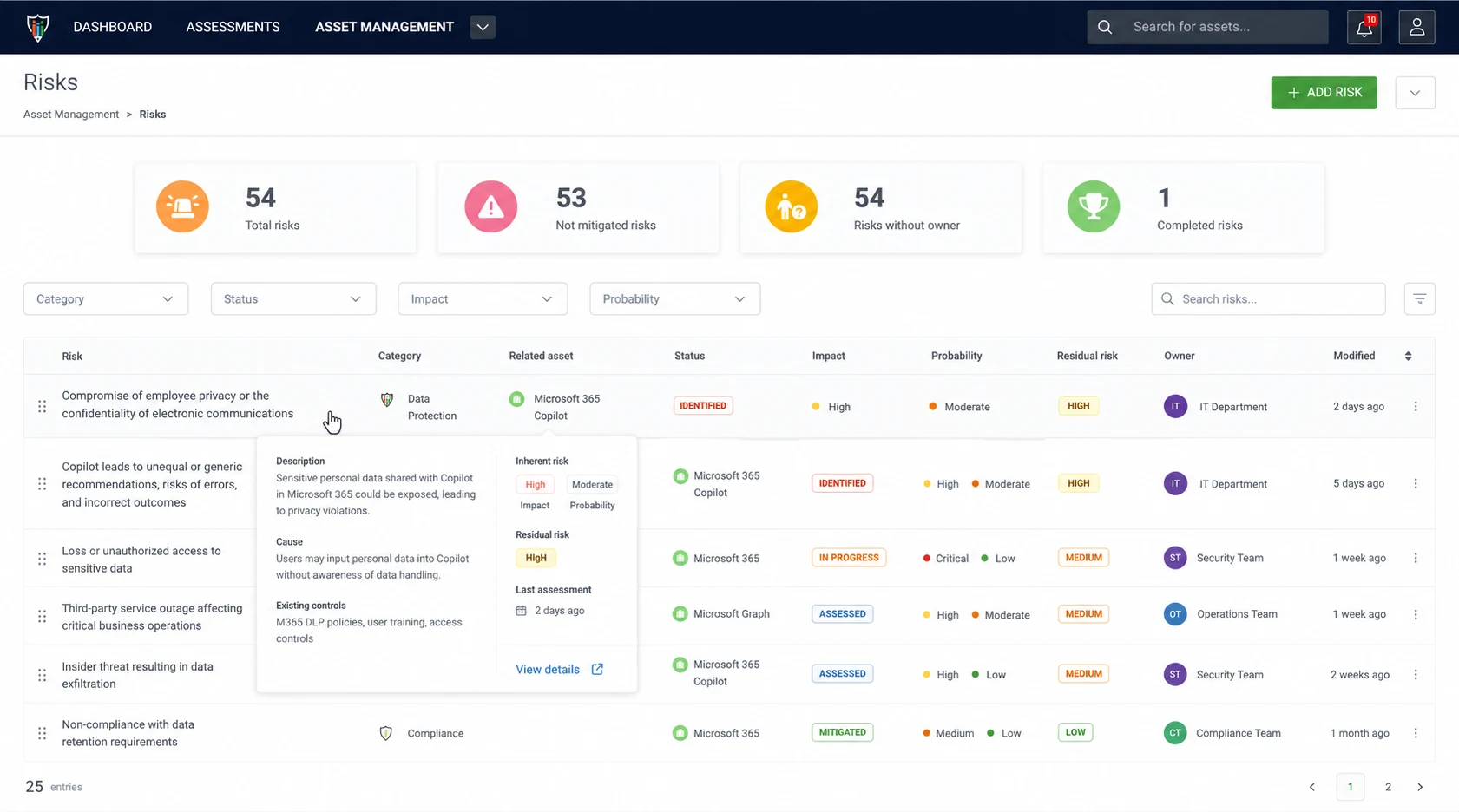
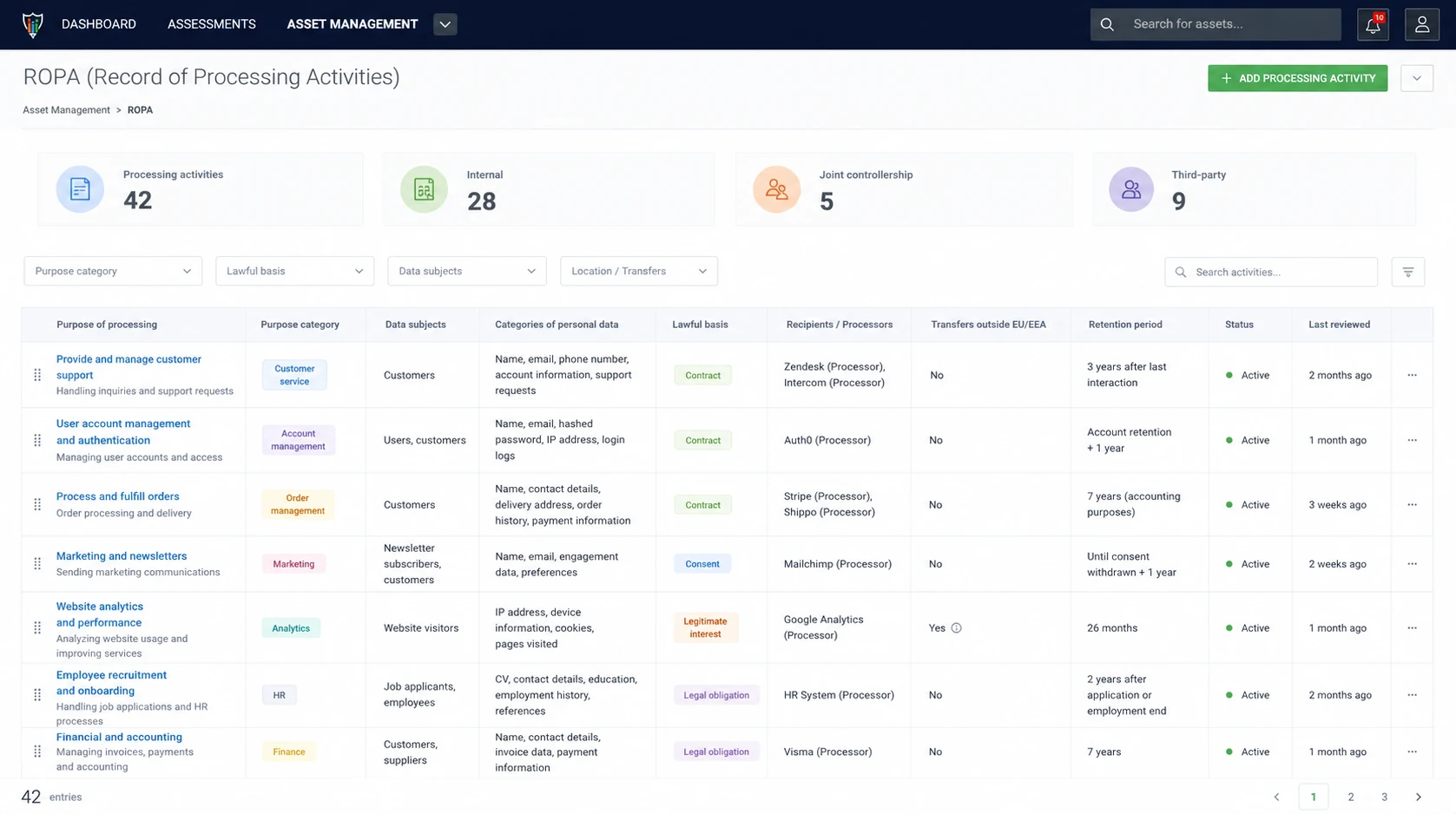
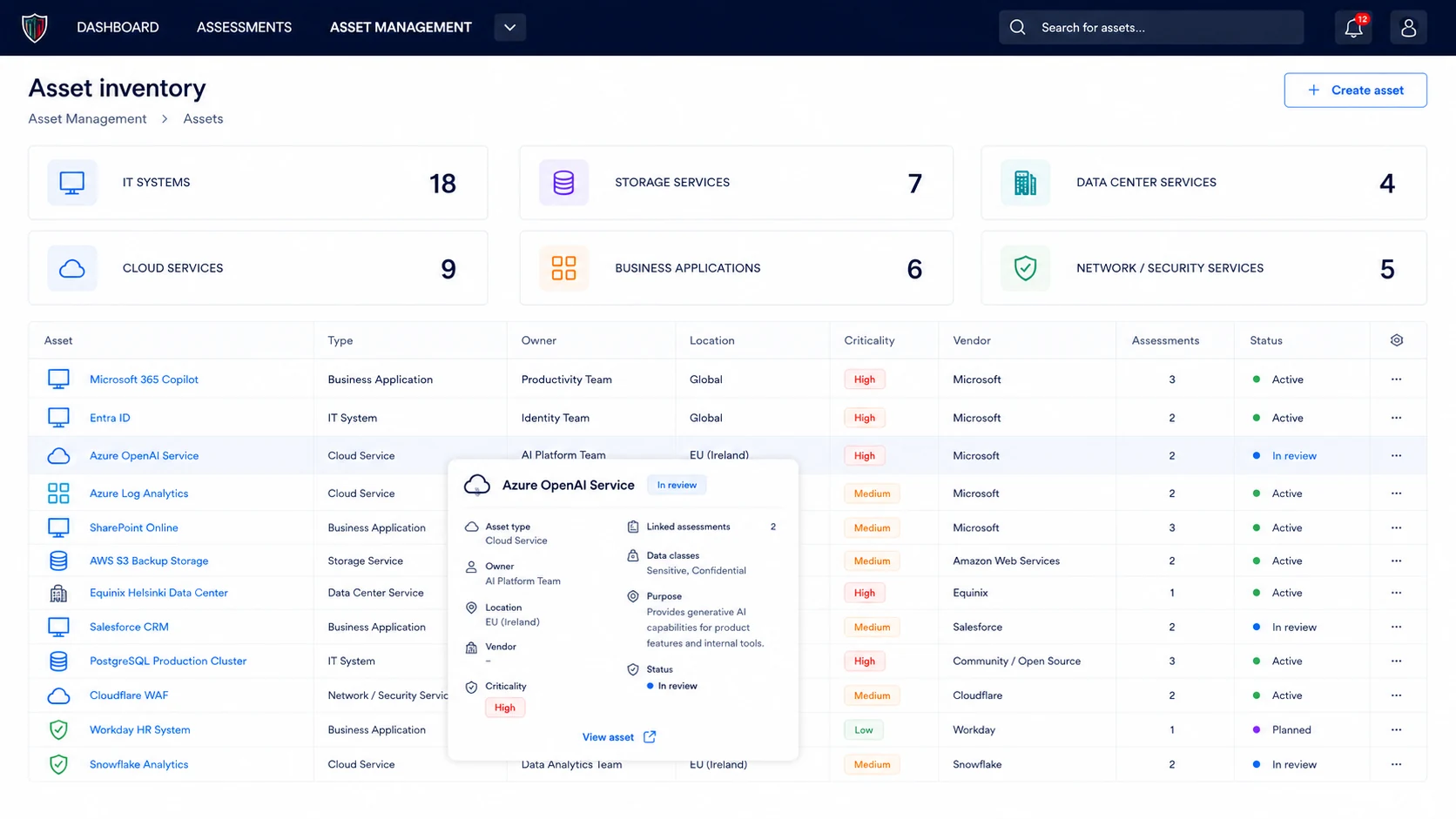
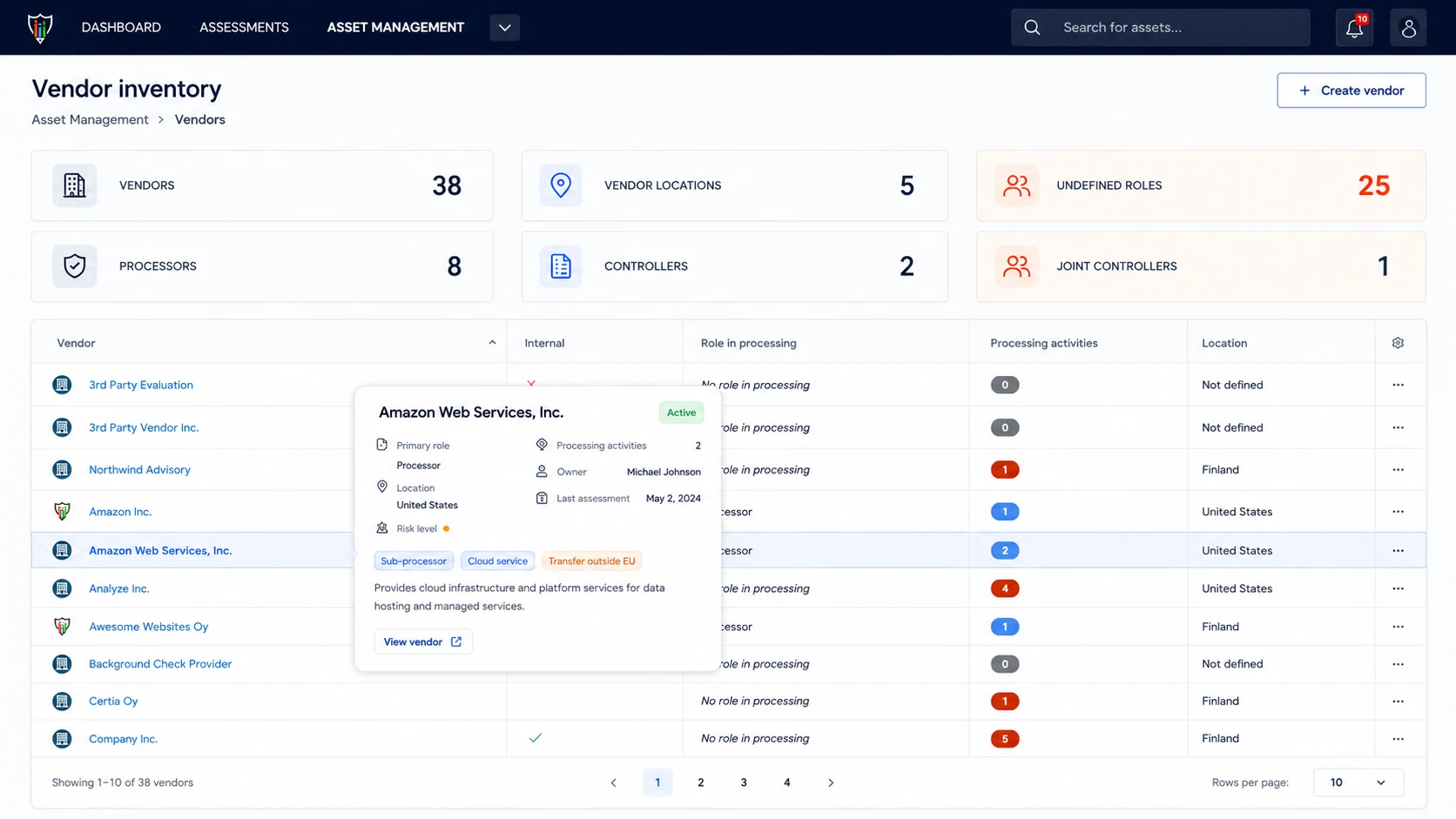
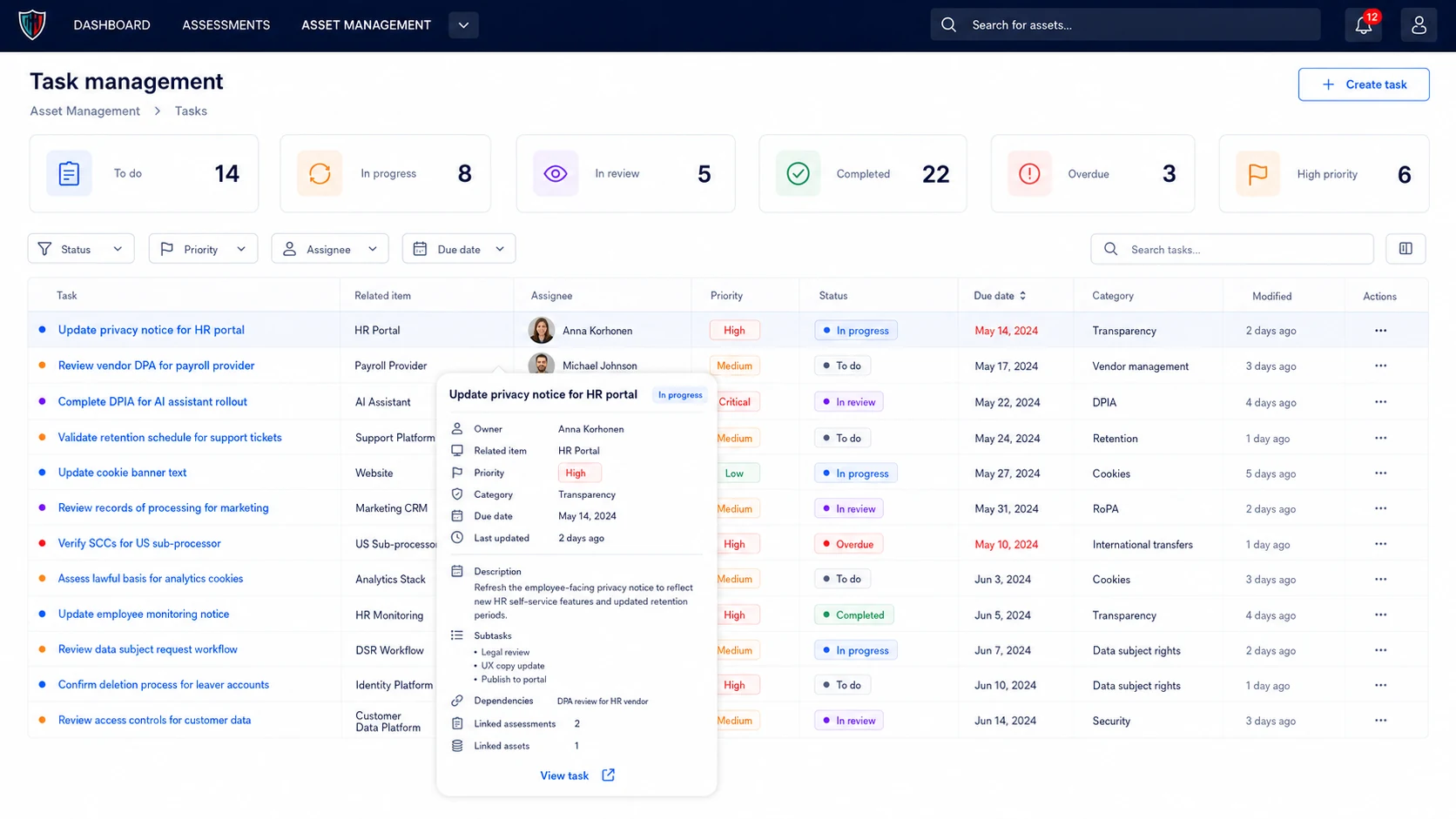
The assessment contributes to connected processing, personal-data, system, vendor, risk and task records in PrivacyDesigner. The project stays linked to the institution’s wider documentation. These are the modules it writes to, use the tabs or arrows to move between them.
Your assessment criteria. Applied to the use in front of you.
Choose the supported framework agreed for the assessment, or configure your organisation’s requirements in PrivacyDesigner. Your colleagues can describe the project in plain language while your experts review the analysis and recommendations.
The team behind Caijo brings more than a decade of hands-on privacy-assessment experience to its fact-finding and documentation approach.
Other privacy questions your team may be facing.
Vendors and third parties
Know what needs attention in a vendor relationship: the service, the access it needs, and the risks worth flagging beyond the questionnaire.
Explore vendor assessmentsAI tools and copilots
A description of the proposed use (what the tool can access, what it produces, and who receives it) plus the requirements and risks that use raises for review.
Explore AI tool assessments