Get beyond the vendor questionnaire. Document what the answers mean.
Build a documented assessment of the service, the access and the risks. Caijo helps your team establish the context and work through the selected vendor-assessment requirements, with open questions and recommended actions visible for qualified review. Explore a guided review of a defined vendor service: we will work with your team to agree the framework and scope, then test how Caijo brings together context, requirements, risks and follow-ups for qualified review.
We’ll work with your team to agree the framework and scope before you start.
“MFA is enabled.” On the access path you are assessing?
An outsourced help desk can reset passwords and handle customer documents. See why a general control statement starts a focused question instead of ending the assessment.
Read the conversation
Less chasing the basics. More time evaluating the evidence.
Make service-owner knowledge usable
Start with the systems, access and information involved in this relationship.
Follow the relevant access path
Turn a broad authentication statement into a question about the console actually used.
Keep evidence gaps explicit
Reported safeguards, unconfirmed controls and proposed checks stay distinguishable.
Document the reasoning
Bring service context, requirement analysis, risk and follow-up work together for qualified review.
The questionnaire is back. The service still needs assessing.
Compare this incomplete hand-off with the contextual review. The before column is not a claim about every questionnaire or competing product.
What the provider states
- “MFA is enabled.”
- “It is only IT support.”
- “We have audit logs.”
- “Security will check it.”
What the review establishes
- Does the evidence cover the provider’s password-reset console?
- Include reset privileges and customer documents in tickets.
- Distinguish recording actions from restricting them or reviewing the logs.
- The evidence check is an open follow-up, not a verified safeguard.
Show the reasoning. Not just the returned questionnaire.
Service and information context
Ticketing, attachments, provider accounts and reset access are documented.
Contextual requirement assessment
Authentication is examined for the console, with the precise evidence gap visible.
Risks and existing safeguards
Unauthorised resets are considered alongside accounts, reported logging and unresolved controls.
Recommended follow-ups
Authentication, permissions, logging and attachment-handling checks become specific work.
More than a report. Information your team can maintain.
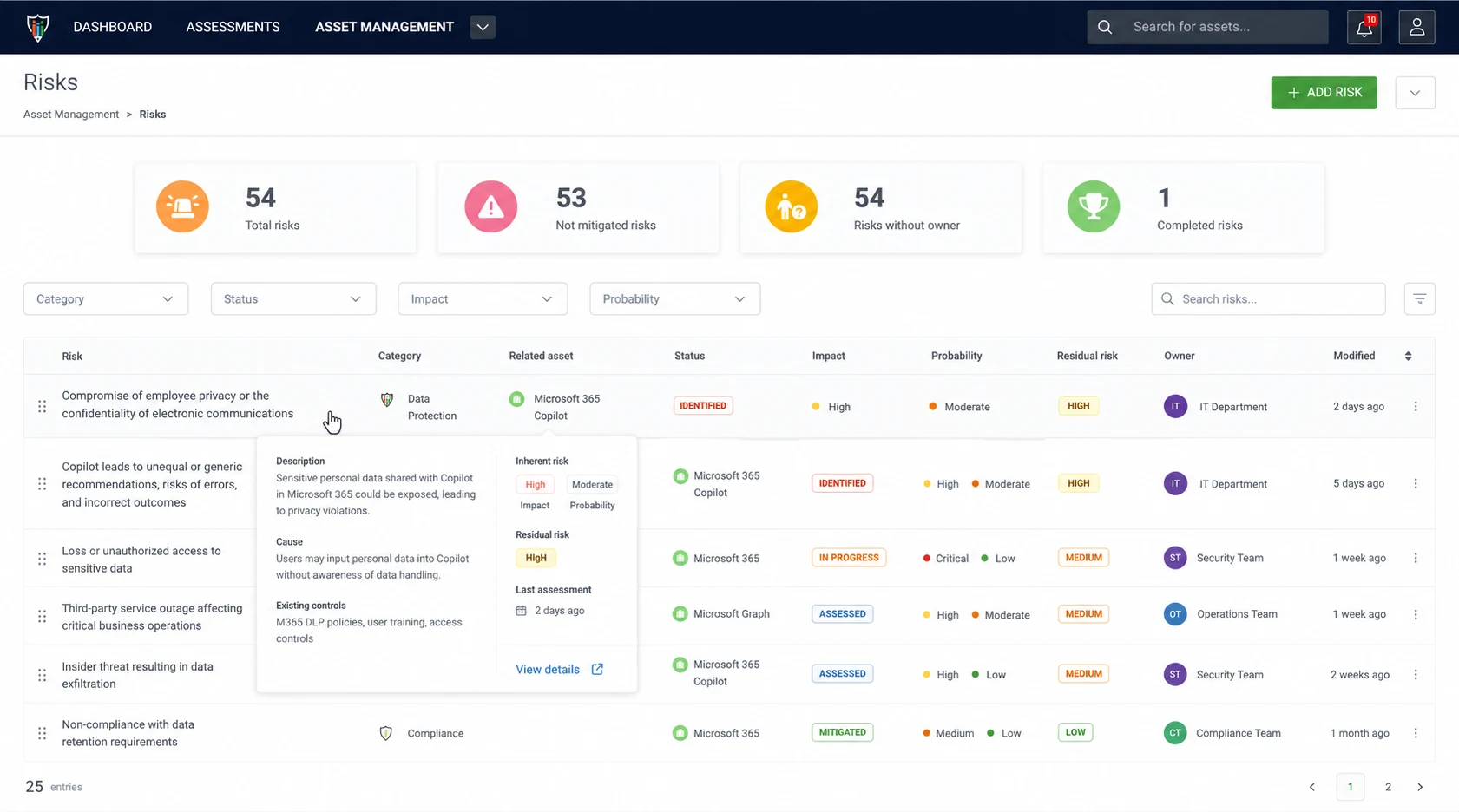
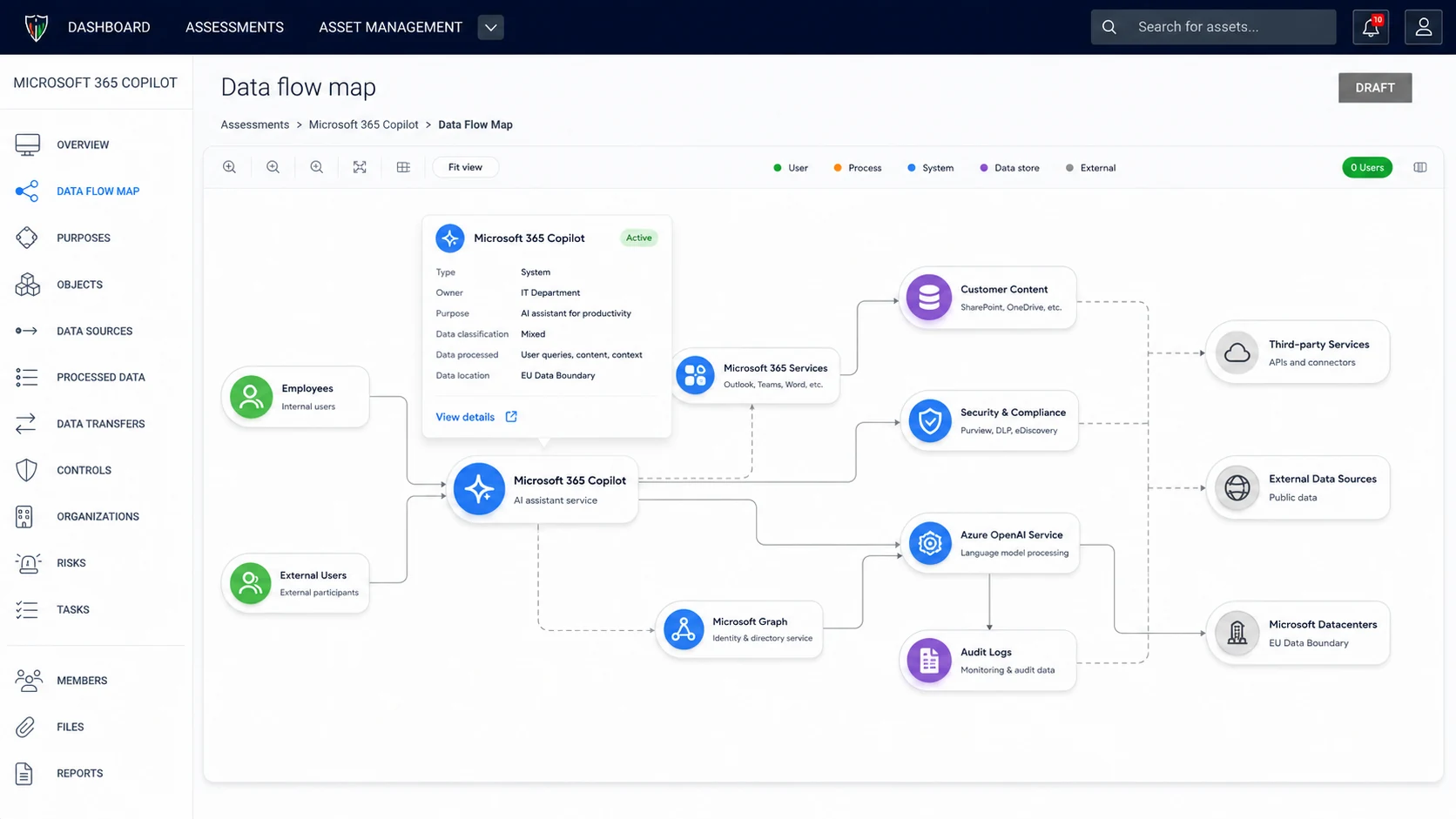
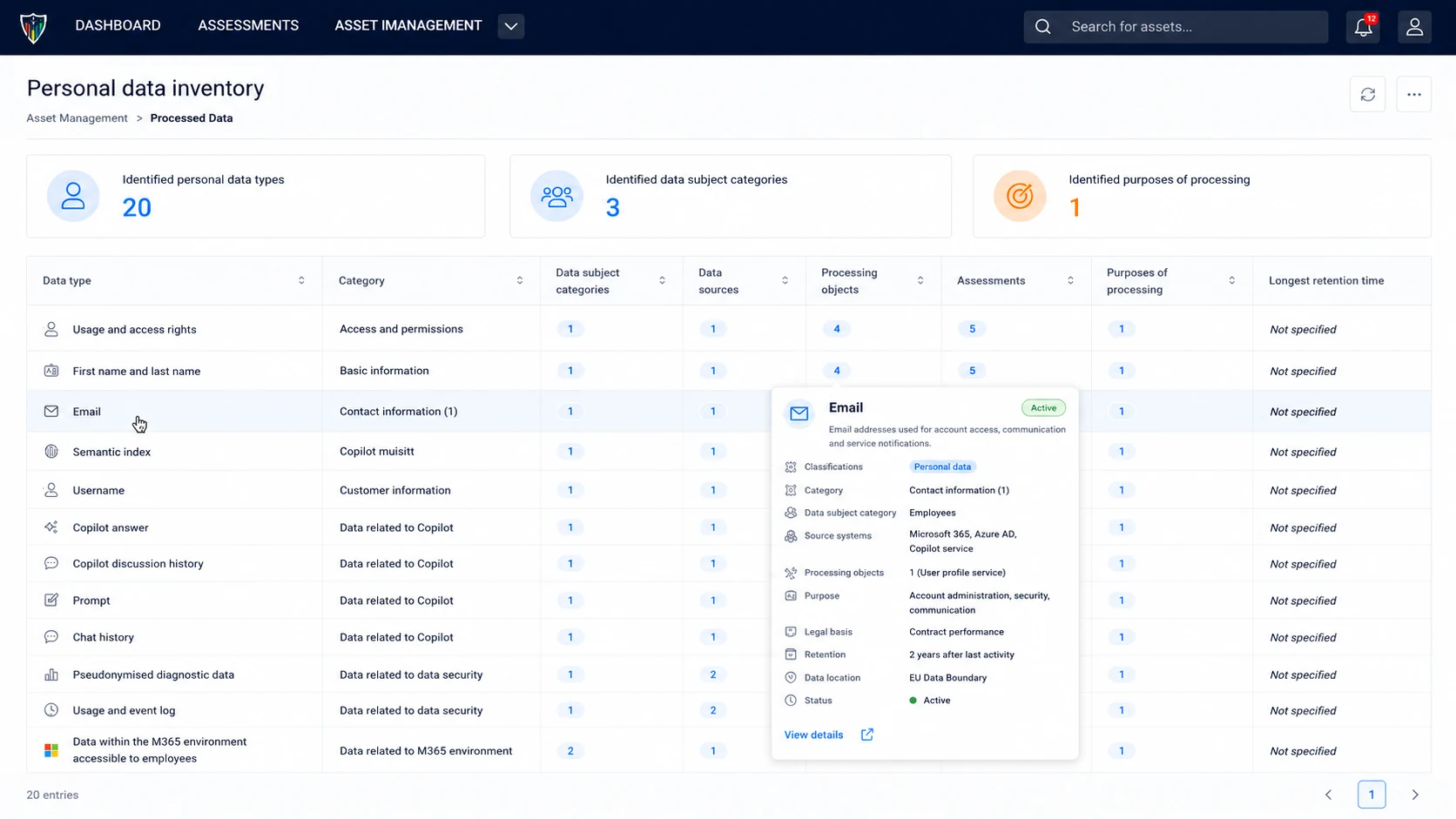
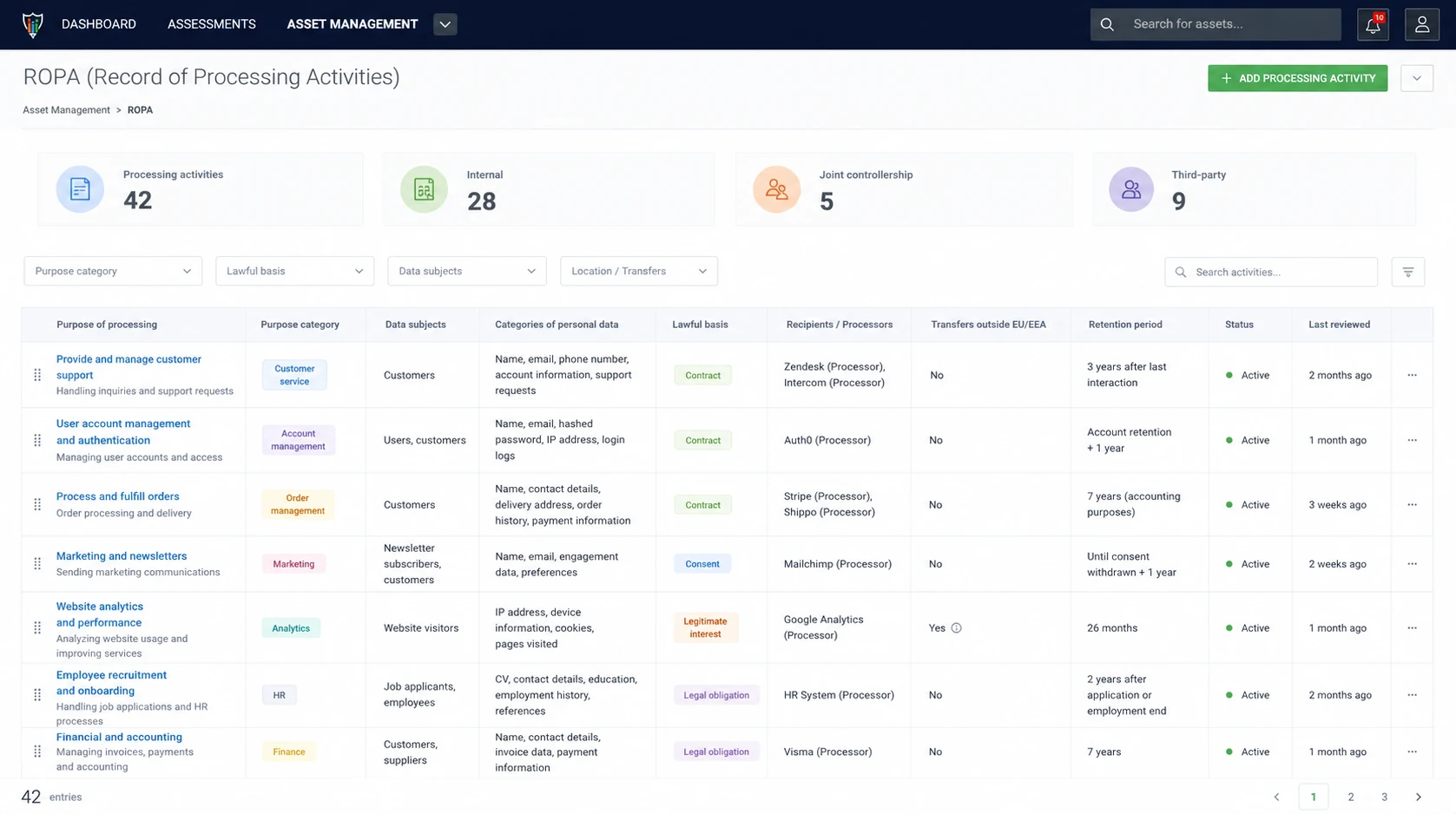
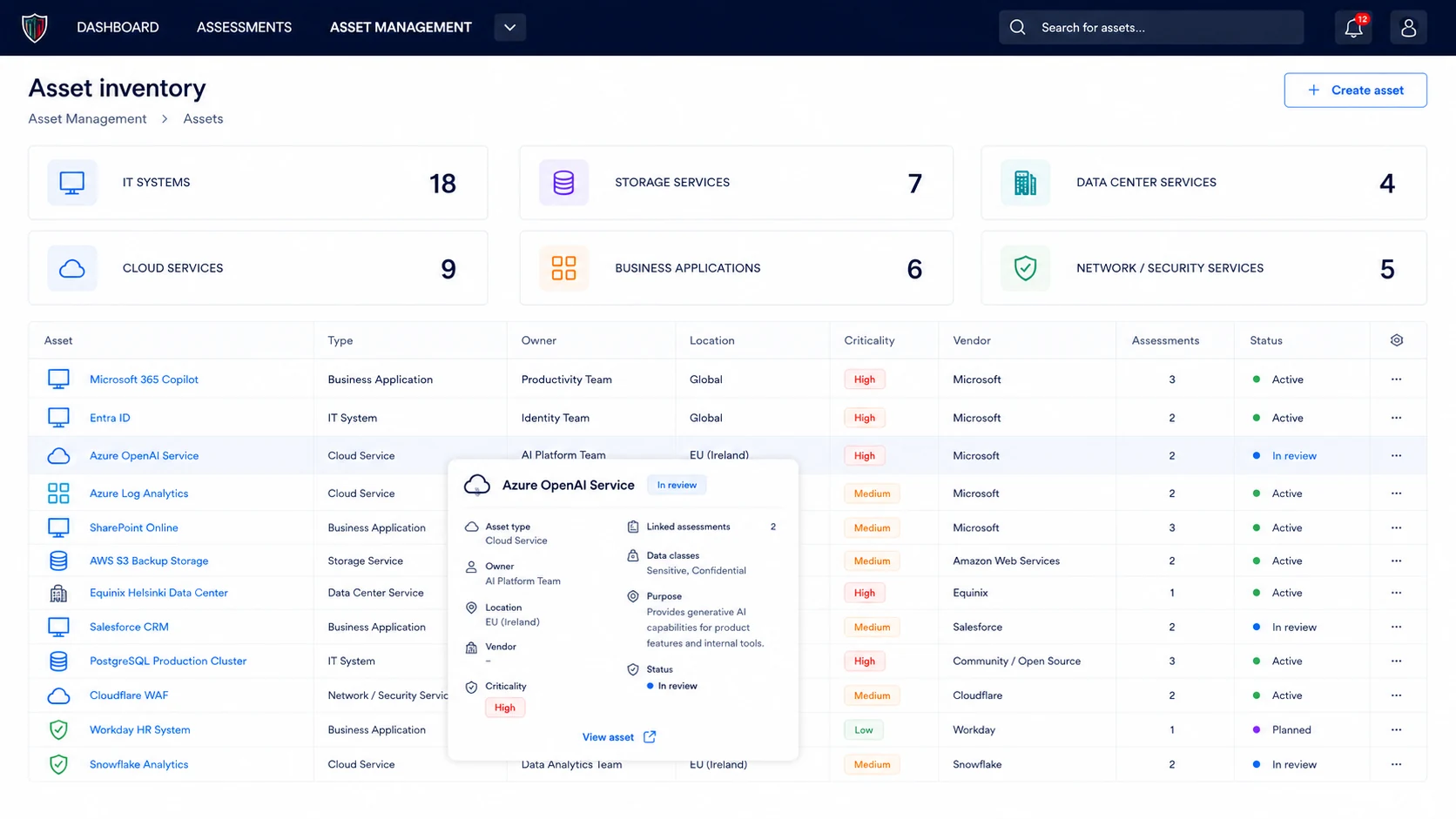
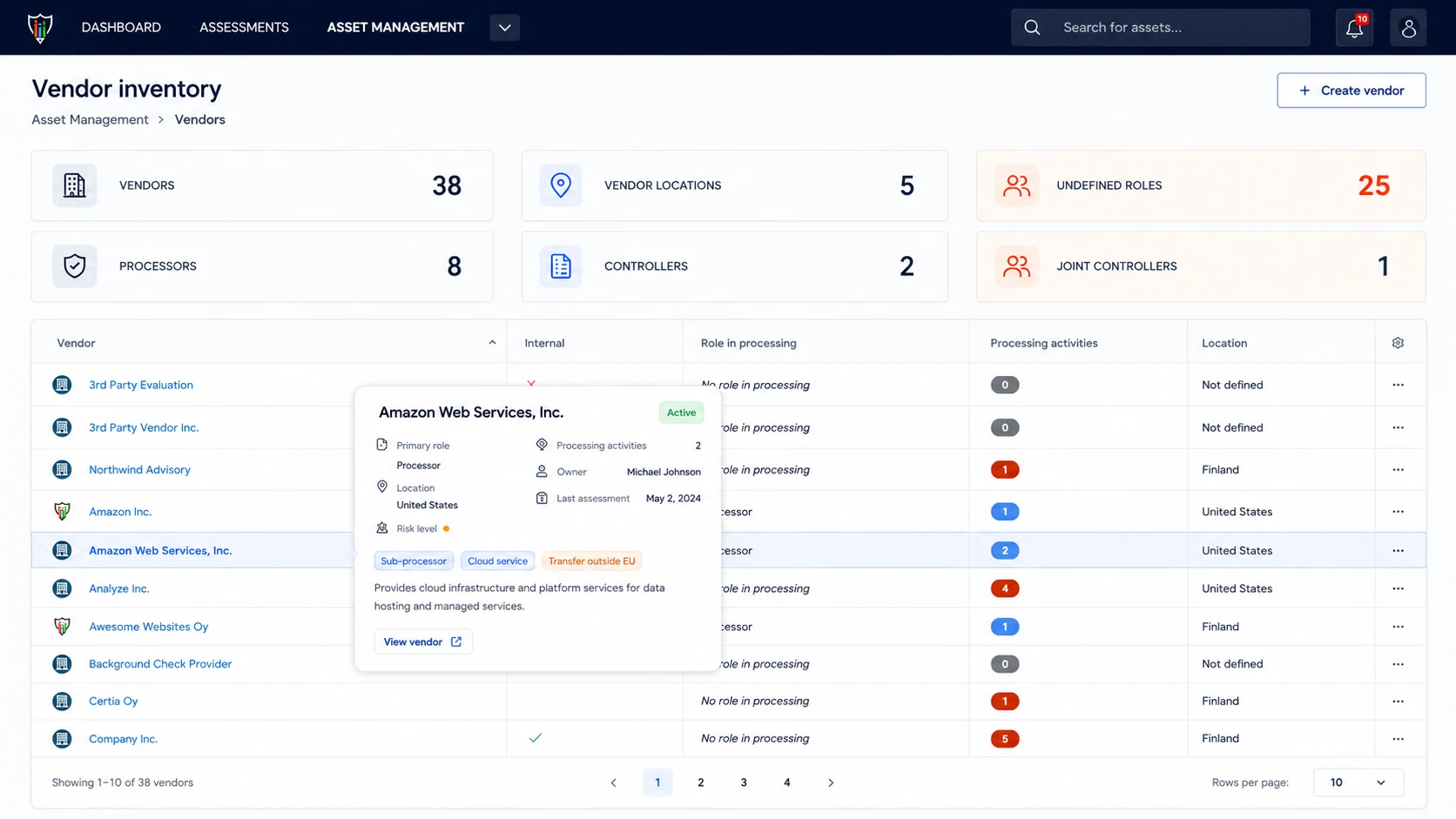
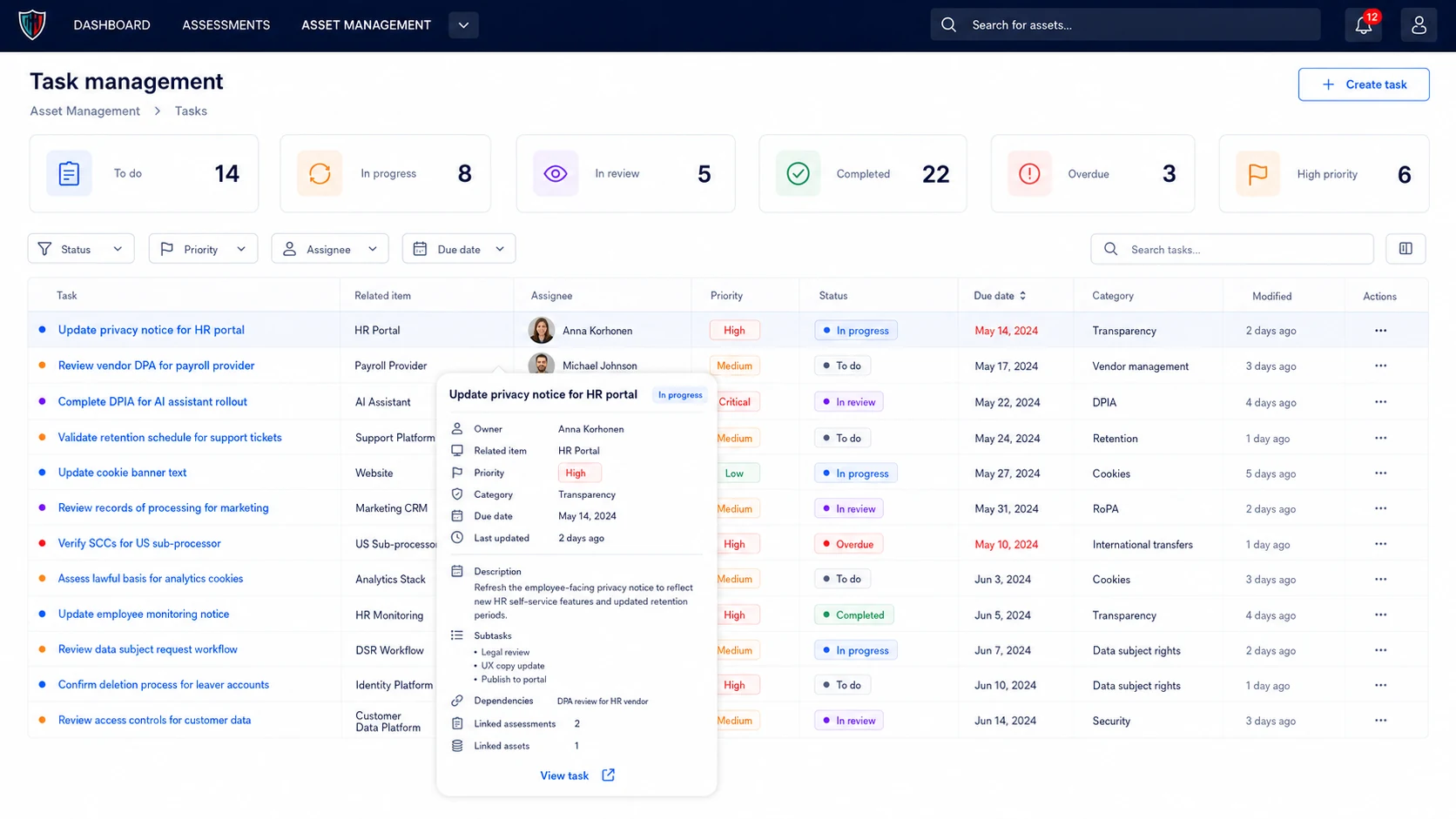
The information contributes to related vendor, system, risk and task records in PrivacyDesigner. Your team can maintain the service context rather than treat the review as a disconnected file. These are the modules it writes to, use the tabs or arrows to move between them.
Your assessment criteria. Applied to the use in front of you.
Choose the supported framework agreed for the assessment, or configure your organisation’s requirements in PrivacyDesigner. Your colleagues can describe the project in plain language while your experts review the analysis and recommendations.
The team behind Caijo brings more than a decade of hands-on privacy-assessment experience to its fact-finding and documentation approach.