Know what needs to change before your AI goes live.

Your team can explain what the AI does. Caijo helps establish what its use could mean for the people affected. Through a guided conversation, Caijo explores the deployment, assesses it against your FRIA framework, and brings the rights risks, oversight findings and recommended actions into a structured assessment for review.

Request free access to try Caijo on your own AI use case.

Start with the deployment Explain it in your own words Get findings and practical actions

A human makes the final decision. What happens before that?

app.privacydesigner.com
Assessments
AI-assisted hardship applications Fundamental rights impact assessment
C
Caijo
AI-assisted hardship applications
Service owner

We want to use AI to rank hardship-fund applications. Caseworkers still make every final decision. The funding is capped each quarter.

Caijo

Let’s map what the ranking changes in practice before working through the requirements. Does it determine the order in which caseworkers open applications, and can the fund run out before they reach everyone? I’m asking because a delay and a missed opportunity for support have different consequences.

Service owner

It sets the queue. Yes, later applicants can miss out that quarter. Some need urgent help, and some apply on paper or with assistance.

Caijo

Then our description needs to include the effect of queue order, not just the final decision. We’ll also describe the groups who may struggle to apply or challenge an outcome. I’ll ask about the remaining workflow and data flows, then have you confirm the description before we assess the requirements.

Caijo

Let’s assess the human-oversight requirement in your framework. When a caseworker opens a file, is the score already visible? Can they change the queue, and is anyone reviewing when and why that happens?

Service owner

The score is at the top. They can change the order, but we don't currently track the changes or the reasons.

Caijo

My proposed finding is that intervention is possible, but the process gives you limited information about whether it is working as intended. Seeing the score first could also influence the reviewer’s judgement.

I recommend defining how urgent or questionable rankings are challenged and how interventions are reviewed. Is that a fair description of the current arrangements?

Service owner

Yes. We also have a general complaints route, but it doesn't explain the role of the ranking.

Caijo

A key risk is that an eligible applicant is ranked too low and receives no support before funding runs out. For someone in acute hardship, that could affect essential needs, not just convenience.

The caseworker’s ability to intervene may help, but only when they find the case in time. What testing do you have on urgent cases, different applicant groups and applications submitted with assistance?

Service owner

We haven't received testing for those situations. It is on our provider question list.

Caijo

I’ll keep the effect of that uncertainty visible in the risk analysis. Relevant testing and a way to detect urgent cases independently of the ranking should be considered before relying on the queue. We can then review the risk rating against the evidence and safeguards actually in place.

Caijo

The assessment now connects the deployment, the people affected, the oversight finding and the potential harm.

I propose three follow-ups: evaluate the ranking for these applicant groups and urgent cases; define an effective review and intervention process; and clarify how applicants can question an outcome influenced by the tool. These are recommended measures, not safeguards already implemented. Do they reflect the work your deployment team needs to take forward?

Service owner

Yes. That is much clearer than just recording that a human makes the decision.

Free testing

Try it on a project of your own.

Request free access to try Caijo on your own AI use case.

Try Caijo for free

Move beyond the system description. Get to the deployment decisions.

Bring the right facts into the room.

The provider knows the product. Your service team knows the workflow. Caijo draws out how the system will actually be used, who is affected and what happens when an output is wrong.

Make safeguards more than a checkbox.

“Human review” means different things in different processes. Caijo asks what reviewers see, what they can change and how problems are identified, so the assessment addresses the oversight you actually have.

Give the deployment team useful next steps.

Turn rights risks into changes to examine: how cases are prioritised, how reviewers intervene, how affected people raise concerns, or what evidence to request from the provider.

A familiar conversation. A structured FRIA.

01

Understand the use

Describe the process, intended period and frequency of use, and the people and groups who could be affected. Caijo helps you confirm the scope before assessing the requirements.

02

Work through the assessment

Examine relevant requirements, implemented oversight and potential harm in the deployment’s actual context. Existing safeguards and proposed improvements remain distinct.

03

Leave with findings and a plan

Get a systematic description, requirement findings, a detailed risk assessment and recommended tasks, including arrangements for responding when things go wrong.

Less “Who can explain this?” More “Here’s what we need to address.”

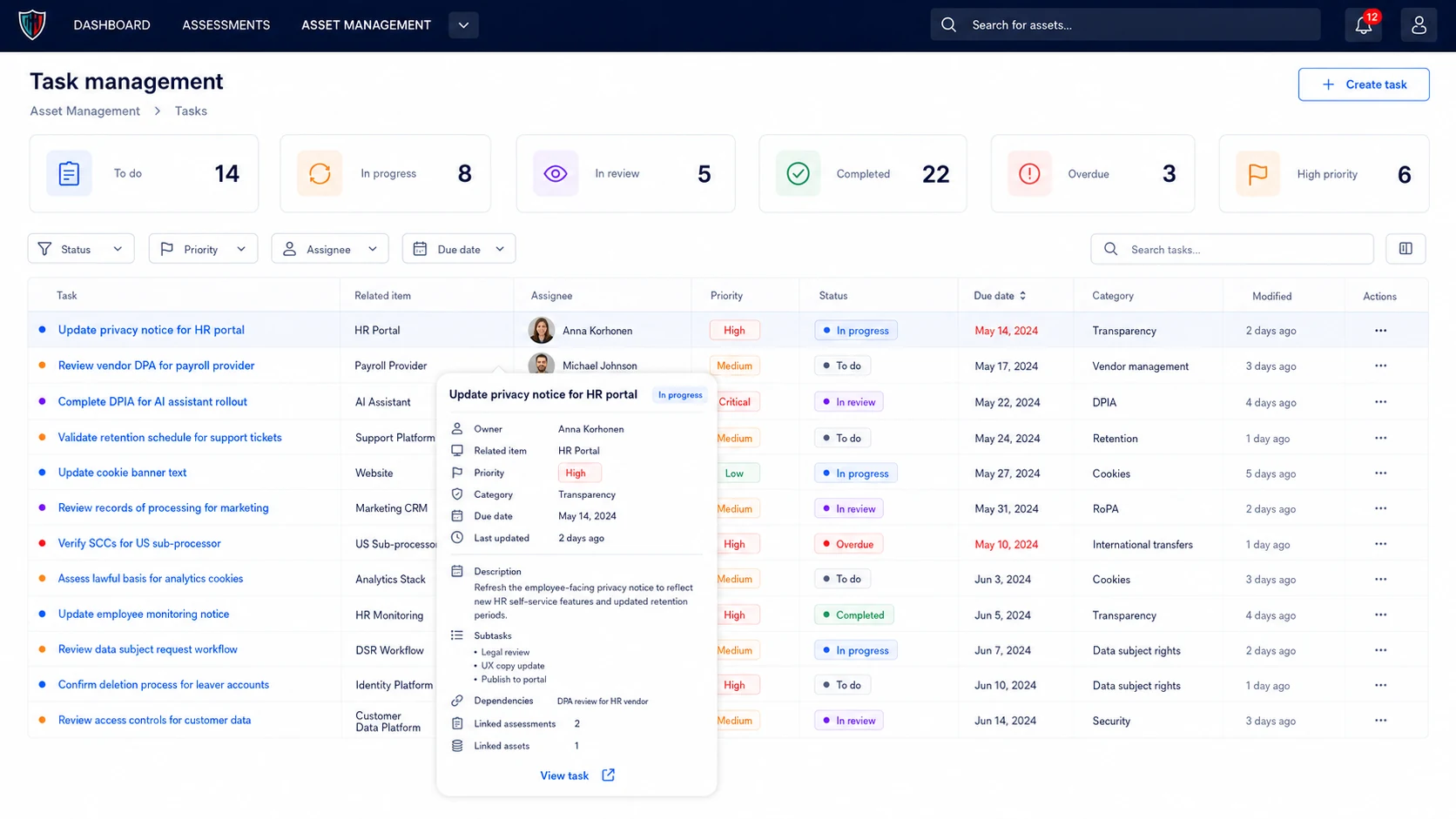
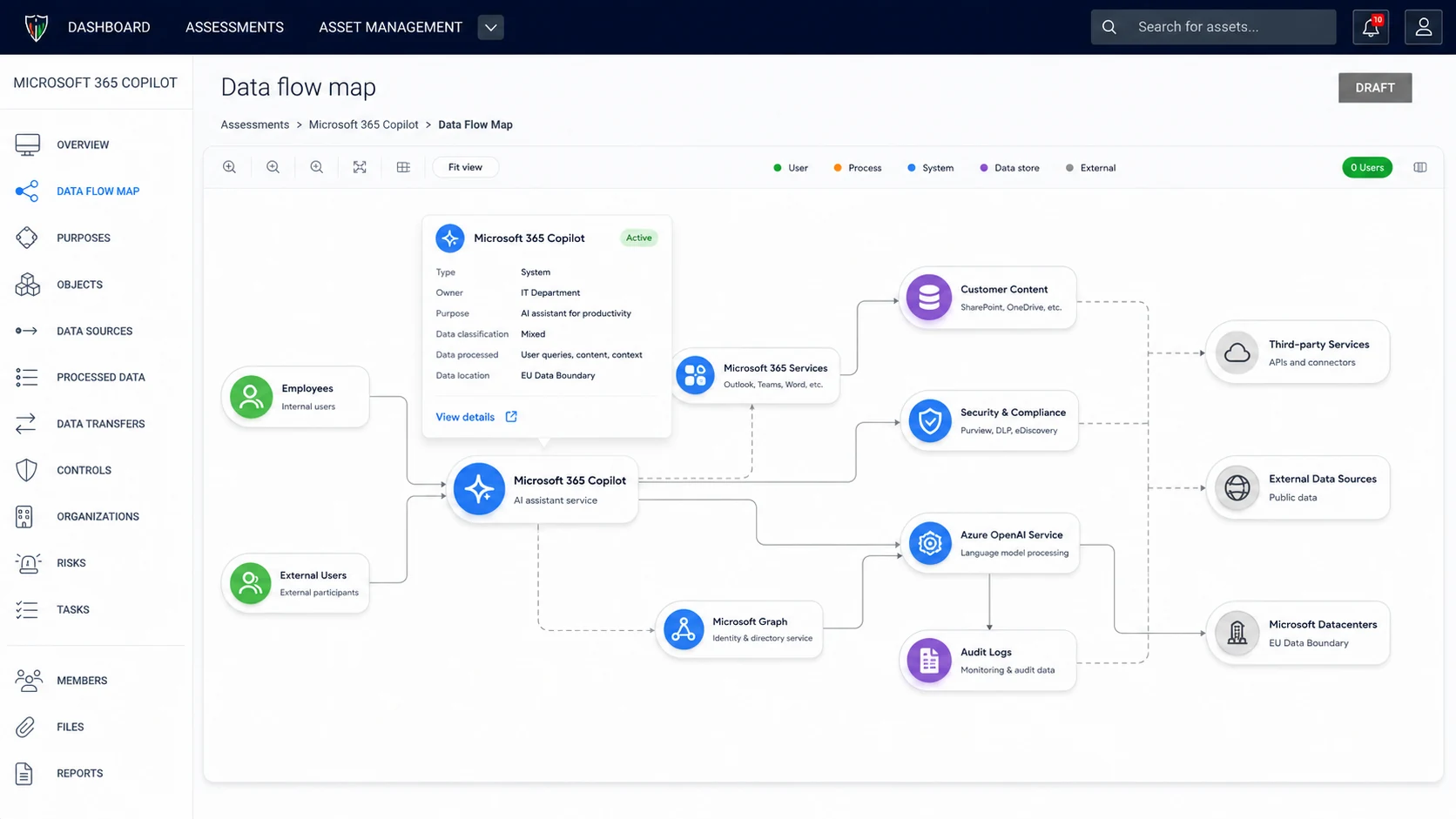
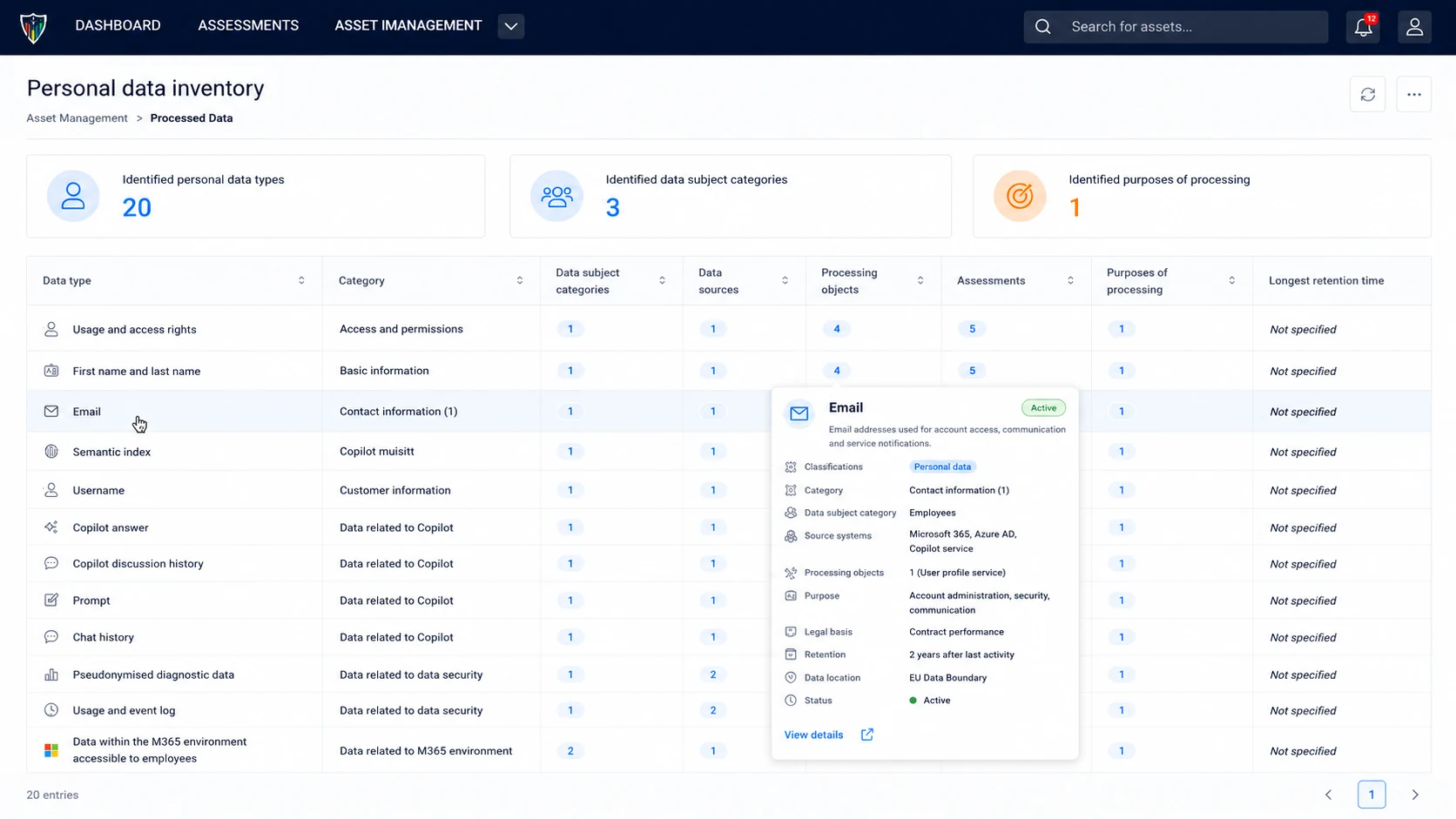
Your legal and governance reviewers receive the deployment context alongside the analysis. Your service team can see which changes and questions matter to the next decision. Deployment information, systems, risks and actions also connect to records in PrivacyDesigner: the work becomes part of your governance documentation, rather than another attachment to reconcile.
Bring the AI use case. Leave the blank template behind.

See how Caijo helps your team move from a description of the technology to an assessment of the deployment, and a practical set of next steps.

Request free test access for your AI deployment.

Request a walkthrough

FRIA questions, answered.

Who should answer: our AI team or our legal team?
Start with the people who know how the system will be used: a service owner, project lead or operational team. Caijo guides the initial interview. Your legal, privacy and other relevant experts review the assessment and contribute where specialist judgement is needed.
Can we start without all the provider documentation?
Yes. Begin with the deployment you know. Where the analysis needs provider information or testing, Caijo makes the gap and its significance clear and proposes a focused follow-up. It does not treat missing information as evidence that a safeguard works.
We already have a DPIA. Can that work help?
Yes. Relevant descriptions, risks and measures can inform the FRIA. Your reviewers should identify which FRIA requirements are already addressed and what remains to assess, including impacts beyond data protection. Existing work should help the analysis, not be discarded or assumed sufficient without checking.
Does every use of AI need this assessment?
No. This page concerns fundamental rights impact assessments, not a blanket obligation for every AI tool. Your organisation determines whether the statutory FRIA requirement applies. For a broader review against privacy, security and internal AI rules, explore custom frameworks.
Does Caijo decide whether the system can be deployed?
No. Caijo prepares the assessment, proposes findings and measures, and supports review. Your organisation remains responsible for the deployment decision and for checking the accuracy and sufficiency of the information used.
Try Caijo for free